
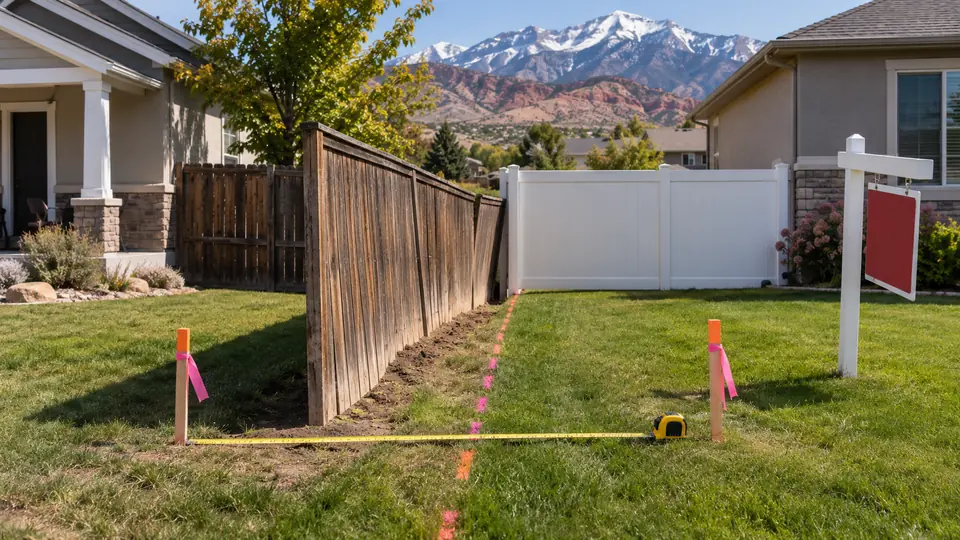
Your Utah home is listed, a buyer is interested, and then the neighbor claims your fence crosses the property line. Can the sale continue? Sometimes. Selling a house with a boundary dispute is possible when the buyer, title company, and any lender accept the documented facts or a lawful resolution. But an unresolved ownership claim can delay settlement or make acceptable title difficult to deliver.
The first move is not to replace the fence or offer a discount. Find out which strip of land is disputed, what the recorded documents establish, and what the closing team requires. Those answers will shape a realistic sale plan.
Selling a Utah Home With a Disputed Property Line
A disagreement with a neighbor does not automatically make your house unsellable. You can often market the property and consider an offer while investigating the claim. Completing the transaction is a separate question: the contract may require marketable title, the insurer may exclude the disputed area, and a mortgage lender may not accept the resulting risk.
The distinction matters because not every boundary issue is an ownership lawsuit. A parcel map that differs slightly from an old fence may need a survey or explanation. A garage extending onto neighboring land may require a negotiated encroachment solution. A neighbor asserting ownership of a valuable portion of the yard can present a much harder title problem.
An as-is clause generally deals with the property’s condition and negotiated repair obligations. It cannot eliminate another person’s potential ownership rights. Before promising a closing date, ask the title officer what is known, what remains uncertain, and whether a buyer can receive the title protection required by the contract.
Sale may proceed: The discrepancy is understood, properly disclosed, and acceptable to the parties and title insurer.
Sale may stall: The disputed land affects access, improvements, ownership, loan conditions, or an unresolved legal claim.
Identify Exactly What the Neighbor Is Challenging
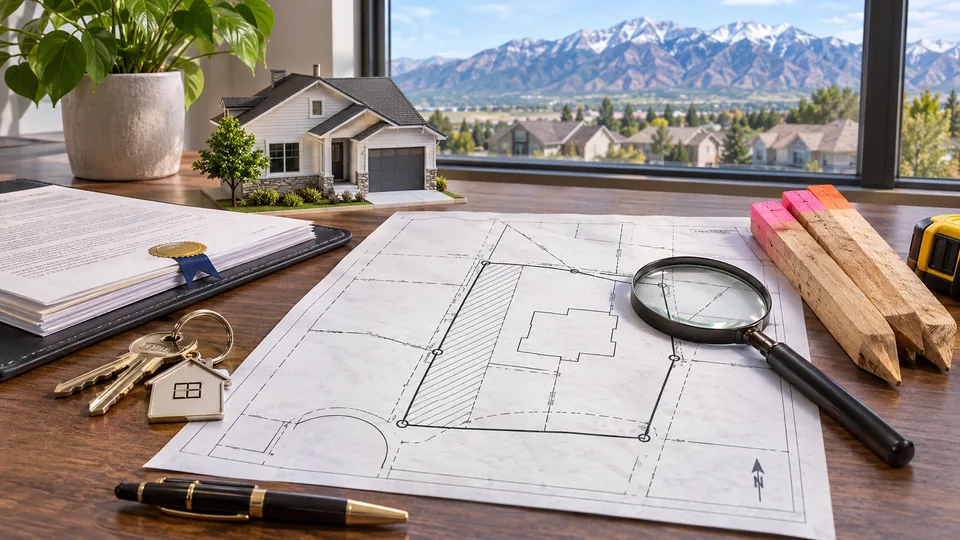
Begin with the deed, not a fence photograph or an online parcel outline. Obtain the recorded deed and legal description from the county recorder, together with plats, prior boundary agreements, easements, and any existing record of survey. The county assessor’s map is useful for locating a parcel but should not be treated as a definitive legal boundary survey.
Next, establish what is happening on the ground. Photograph fence posts, retaining walls, driveways, sheds, garages, irrigation lines, and landscaping near the questioned line. Preserve dates, letters, text messages, contractor plans, and any prior neighbor agreement. A written record is especially helpful when the seller inherited the home and cannot explain when a fence was installed.
If the documents conflict or physical features are in question, ask a Utah-licensed land surveyor to locate the boundary and explain the findings. The surveyor identifies measurable facts; an attorney evaluates claims that a legal boundary changed through conduct, agreement, or a court decision.
When a Survey Reveals an Encroachment
A fence or driveway extending over the surveyed line is an encroachment, but the significance depends on its location, history, and legal rights. Measure the affected area and identify whether the improvement blocks access or needs removal. Do not move survey markers or demolish shared improvements without professional advice. Doing so could intensify the dispute and complicate the sale.
Ask whether the problem is a survey discrepancy, a known physical encroachment, or an actual competing claim to ownership. Each may require a different document before escrow can close.
How a Boundary Claim Affects Title Insurance and Financing
The title commitment is the place to learn how the dispute affects settlement. Ask the title or escrow officer to identify the exact exception, requirement, or recorded document involved. Standard policy language may exclude matters that an accurate survey would disclose, while an identified dispute can require separate underwriting review. Whether any additional coverage or endorsement is available depends on the insurer and transaction.
Title insurance is not a universal promise that every fence sits on the legal line. It protects against covered risks subject to the policy’s terms and exceptions. A title insurer may be willing to issue a policy with a boundary exception even when the buyer dislikes that limitation. Conversely, a buyer may accept the physical condition while a lender refuses to fund without satisfactory title coverage.
Consider a driveway crossing a neighboring parcel. If the seller has a valid recorded access easement, the closing issue may be manageable. Without documented access, the buyer may want a new easement or another solution before making the purchase. A small strip beneath landscaping poses different practical concerns from a dispute involving the only access road.
Ask the closing team three direct questions: Which boundary-related exception or requirement applies? What evidence or recorded agreement would address it? Will the purchaser and lender accept the final title terms? Get the answers in writing before agreeing to expensive work or shortening a contingency period.
If a contract is already signed, review its title objection, survey, financing, inspection, and extension provisions with counsel. A disclosure to the buyer does not automatically satisfy a title condition. Likewise, a lender’s approval of the appraisal does not establish legal ownership of disputed land.
Legal Options for Resolving a Utah Boundary Dispute
Start with a survey and an informed conversation rather than assuming litigation is inevitable. Sometimes both owners can agree on the correct location after comparing deeds and survey evidence. A carefully drafted, recorded document may then establish an uncertain boundary or address an encroachment. Where they cannot agree, a Utah real-estate attorney can evaluate court relief, including a quiet-title action when ownership must be judicially determined.
Utah law distinguishes boundary establishment from boundary adjustment. Under Utah Code §57-1-45, adjoining owners may record an appropriate establishment document to clarify an ambiguous, uncertain, or disputed common boundary. That does not itself constitute municipal or county land-use approval, and local land-use regulations still matter.
Moving a known common boundary is different. A boundary adjustment may require local land-use authority consent and additional recording materials under applicable state statutes. The 2026 recording standards address legal descriptions, diagrams, signatures, and survey-related documentation. Ask counsel and the county recorder which process fits the facts; do not use a simple agreement to disguise a transfer that requires approval.
Boundary by Acquiescence Is Different From Adverse Possession
Utah recognizes boundary by acquiescence where adjoining owners have treated a visible line as the boundary, occupied to that line, mutually acquiesced, and met a period of at least 20 years. These elements need proof; a fence’s age alone is not a winning claim. Photographs, former-owner testimony, deeds, and the history of use may matter.
Adverse possession is a separate doctrine generally involving at least seven years of qualifying adverse possession and statutory conditions, including tax payment requirements. Mowing beyond a fence for a few seasons does not automatically transfer ownership under either rule. Do not promise a buyer that a neighbor’s claim is invalid, or that a long-standing fence conclusively controls, without legal review.
Where negotiations fail, court action may be required to clarify rights. Litigation can complicate closing dates and costs, so have counsel assess its likely role before accepting an offer that assumes the case will end quickly.
Repair the Problem, Negotiate Terms, or Sell As-Is?
The best selling route depends on the value of the disputed area, the certainty of the legal position, and what the buyer needs to close. A seller may choose to resolve the claim before listing, arrange a lawful settlement before closing, or negotiate a sale that expressly accounts for the unresolved issue. None is automatically available in every case.
Resolve first. This option is often worth considering if an encroachment affects a driveway, garage, required setback, or substantial yard area. It may improve the buyer pool and financing prospects, but the seller must budget for survey work, legal fees, recording, and possible construction or land-use approvals.
Negotiate during escrow. If both owners agree, an appropriately documented easement, boundary establishment, adjustment, or other settlement might satisfy the buyer and title insurer. A price concession, indemnity, or escrow holdback should not be offered as a guaranteed substitute for title clearance. The insurer, lender, closing parties, and any necessary regulator must agree to the arrangement.
Sell with the issue disclosed. Some purchasers, including direct cash buyers, may investigate and accept a known boundary risk. Paying cash removes the mortgage approval step, not the underlying ownership dispute. A buyer still needs to understand what is being conveyed and whether a closing attorney or insurer can complete the transaction on acceptable terms.
Compare each proposed outcome using expected sale proceeds minus survey, legal, repair, concession, and continuing carrying costs. Do not rely only on the highest stated purchase price. A lower offer with workable contingencies may be more useful than an offer based on title assumptions that cannot be met.
A Five-Step Seller Checklist Before Signing or Extending a Contract
1. Verify the land records. Gather the current deed, legal description, recorded plats, prior surveys, easements, and any agreement affecting the disputed side of the lot. Match documents to the correct parcel and owners.
2. Document the actual issue. Photograph the fence, driveway, building, or access point. Save dated neighbor communications. Obtain a licensed survey when measurements or monuments are uncertain; do not disturb markers yourself.
3. Ask for title and legal guidance. Give the title commitment, survey, and claim details to the title officer and Utah real-estate attorney. Determine whether the matter is merely a survey exception or a substantive competing claim, and identify acceptable remedies.
4. Disclose and negotiate accurately. Tell the buyer about known boundary disputes and share relevant documents through the transaction team. Agree in writing on who will secure surveys, approvals, releases, and any necessary work. An as-is label should never conceal a known claim.
5. Confirm closing conditions. Before removing contingencies or extending the deadline, obtain the lender’s and title insurer’s requirements, the necessary recorded documents, and a realistic schedule. Review the final legal description and title exceptions before signing.
The most useful file for a buyer is not a stack of unexplained maps. It is a clear record of what is disputed, what the professionals concluded, what must be recorded, and who is responsible for each remaining step. Keep this file current if the neighbor changes the claim while the home is under contract.
Frequently Asked Questions
Can I sell my Utah house if my neighbor disputes the boundary?
Potentially. You may be able to list and negotiate while the claim is under review. Closing depends on the disputed area, buyer acceptance, title insurance, and any lender requirements. Disclose the known dispute and have a surveyor, title officer, and attorney identify the necessary resolution.
Will a boundary dispute stop the title company from closing?
Not in every transaction. The insurer may require a recorded agreement, satisfactory survey evidence, court resolution, or an exception the buyer accepts. A lender can impose additional conditions. Ask for the specific underwriting requirement rather than assuming either automatic approval or automatic denial.
What if the survey finds my fence or driveway on a neighbor’s land?
Preserve the survey and identify the area affected. Notify the title and legal professionals before changing the improvement. A negotiated easement, boundary document, removal, or court process may be considered, depending on the legal rights and the parties’ agreement. Do not promise a quick fix.
Can I sell as-is without first resolving the property line dispute?
Sometimes, but as-is does not transfer clear title or erase another owner’s claim. The buyer must understand the risk, and financing and title terms must permit the closing. Any unresolved responsibility should be described precisely in the contract and reviewed by local counsel.
Can a cash home buyer purchase property with an unresolved Utah boundary dispute?
Possibly. A cash buyer may accept risks a mortgage lender would not, but cash does not determine the legal boundary or cure title defects. Compare written offers, proof of funds, title exceptions, legal costs, and responsibility for future resolution before choosing that route.
Conclusion: Clarify the Line Before Committing to Closing
A Utah boundary dispute does not automatically stop a home sale, but an unresolved property claim can create genuine financing and title obstacles. Start with the recorded deed and survey evidence, then find out what the neighbor claims and what the closing team requires. Compare a documented agreement, a lawful correction, and a fully disclosed sale using realistic costs and risks. Before promising a settlement date, confirm the title insurer’s requirements and obtain Utah legal advice where ownership is contested.