
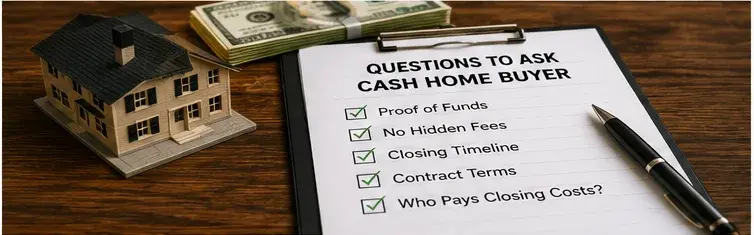
A cash offer can remove lender delays, repeated showings, and some repair work, but speed alone does not make an offer safe or financially strong. When choosing a cash home buyer in Utah, focus on whether the buyer can actually close, how much money you will receive after every deduction, and what the purchase agreement requires from you. Cash home buyers Utah sellers contact may use different fee structures, inspection terms, and timelines. A clear written offer matters more than a verbal promise. Before taking your property off the market, verify the buyer and make sure the final cash offer on house terms match what you were told.
How Does a Cash Home Sale Usually Work?
Most cash sales follow a simple path. The buyer asks for basic property details, reviews the home or schedules a walkthrough, prepares a written offer, and then moves into title work and closing if the seller accepts. Because there is no mortgage underwriting for the buyer, one major source of delay is removed. That does not mean every cash transaction closes immediately or without conditions.
Cash buyers may value property differently. A buyer can consider comparable sales, condition, repair scope, resale risk, holding costs, and the return needed for its model. There is no universal rule showing how much do cash home buyers pay. Ask how the buyer calculated the offer instead of relying on a fixed percentage.
The written agreement is the point where the deal becomes specific. It should show the price, deadlines, closing date, costs, contingencies, and any rights to change or cancel the transaction. Those details are why the questions below matter before you sign.
10 Questions to Ask Before You Sign
The best questions to ask before selling your house for cash are the ones that reveal who is buying, how the price was built, what can change, and what you will actually receive at closing.
1. Are You the Actual Buyer, or Can the Contract Be Assigned?
Ask whether the company named in the agreement plans to buy the property itself or may transfer its contractual rights to another party. This matters because the person making the first offer may not be the person bringing funds to closing.
The current state approved Utah Real Estate Purchase Contract generally restricts assignment without the seller’s prior written consent, apart from defined permissible transfers. A private cash home buyer contract can use different language, so read the exact assignment clause. If real estate contract assignment Utah wording is unclear, get qualified legal review before you commit.
2. Can You Show Proof That the Funds Are Available?
Ask for current proof of funds from a cash buyer that reasonably supports the proposed purchase price and identifies the buyer or purchasing entity. A bank statement, financial institution letter, or other credible evidence of liquid funds can help show that closing is not dependent on finding money later.

3. How Did You Calculate the Offer?
Ask the buyer to explain the major numbers behind the cash offer on house, including comparable sales, repair estimates, property condition, resale assumptions, or other major deductions. You should understand why the offer is what it is, even if the buyer does not reveal every part of its business model.
4. Can the Price Change After the Walkthrough?
Find out whether the written price is final or whether the buyer can reduce it after an inspection, walkthrough, or further review. If changes are allowed, ask what conditions can trigger them and whether deductions must be documented.
A high preliminary offer can be less useful than a lower firm offer if the contract gives the buyer broad room to reprice later. Hidden fees selling house for cash are not the only concern. A late price reduction can have the same effect, so request material adjustments in writing.
5. Who Pays the Closing Costs and Other Fees?
Purchase price and net proceeds are not the same number. Ask who pays title, escrow, settlement, recording, and any other transaction charges that apply. Some buyers may cover certain costs, while another cash home buyer closing costs arrangement may place items on the seller.
6. What Contingencies Let You Cancel the Purchase?
A cash purchase can still contain inspection, title, partner approval, or other contingencies. Cash describes the funding source. It does not automatically mean the buyer has no conditions.
Read each contingency and its deadline. Ask what happens to earnest money if the buyer cancels or defaults, based on the agreement. A strong cash home buyer contract should make the buyer’s exit rights understandable rather than hiding them in broad language.
7. What Happens If I Need to Cancel?
Seller cancellation rights can be very different from buyer cancellation rights. Review any deadlines, default provisions, damages, fees, or other consequences that apply if you change your mind after signing.
A no obligation quote is not the same as a freely cancellable purchase agreement. What to look for in a cash home buyer contract includes your obligations after acceptance. If a binding term is unclear, get independent legal advice before signing.
8. Which Title or Settlement Company Will Handle Closing?
Ask for the closing company’s name early and verify its contact information independently. The title or settlement professional coordinates title work, payoff figures, signed documents, and the movement of funds. A confirmed closing company is one of several signs of a legitimate cash home buyer.
9. What Is the Real Closing Timeline?
Ask for the earliest realistic closing date, your preferred closing date, and every condition that could delay funding. A buyer saying ‘we close fast’ is less useful than a contract that contains a clear closing date and workable deadlines.
10. Can I Take Time to Review the Written Offer?
You should be able to read the agreement, compare written options, and seek independent advice before signing. A legitimate buyer may have a genuine deadline, but unexplained pressure for an immediate signature is a reason to slow down and verify the deal.
How to Verify a Cash Home Buyer in Utah
To verify a cash home buyer, start with facts that can be checked. Confirm the legal business name and the person authorized to sign. Review the company’s website, business information, reviews, and complaint patterns, treating reviews as one signal rather than proof.
Then verify the transaction. Ask for reasonable proof of funds, confirm the title or settlement company, and read the complete purchase agreement. Reputable cash home buyers Utah sellers consider should be able to explain who is buying, how the offer was calculated, which costs are deducted, and what can change before closing.
Use this short due diligence checklist:
- Buyer or company identity is confirmed.
- Available funds are reasonably verified.
- Fees and seller paid costs are itemized.
- Assignment, contingency, cancellation, and default terms are understood.
- Title or settlement company information is independently confirmed.
- Closing date and possession terms are written clearly.
Cash Home Buyer Red Flags That Deserve a Closer Look
Some warning signs do not prove a scam, but they justify additional checking. Common cash home buyer red flags include pressure to sign before reviewing the agreement, refusal to identify the contracting buyer, and refusal to provide reasonable evidence of available funds.
Also look closely at verbal promises missing from the written offer, unexplained deductions, large late price changes, or instructions to bypass the normal closing professional. Requests to transfer a deed outside a verified closing process or send money to an unverified person require particular caution.
Compare the Net Proceeds, Not Just the Offer Price
Two cash offers can have different values even when one has the higher price. Use a simple calculation: offer price minus seller paid closing costs minus required repairs or credits minus other contract deductions equals estimated net proceeds.
For example, an offer of $400,000 with $8,000 of seller paid costs produces about $392,000 before other deductions. A $395,000 offer where the buyer pays those costs may leave more. Review cash home buyer fees and other deductions using the same calculation.
When a Cash Sale May Be a Good Fit
A cash sale can be useful when speed, a simple as is transaction, or certainty matters more than reaching the highest possible market price. Common situations include a home needing major work, an inherited property, relocation, a landlord exit, or a firm deadline.
Final Checklist Before Signing
Before choosing a cash home buyer in Utah, confirm the items that determine whether the deal is clear enough to accept.
- Know the legal identity of the buyer.
- Verify available funds.
- Understand how the offer was calculated.
- Know when and why the price can change.
- Itemize fees and closing costs.
- Read assignment, contingency, cancellation, and default terms.
- Confirm the closing company independently.
- Do not sign a term you do not understand.
Frequently Asked Questions
Are cash home buyers legit in Utah?
Yes, legitimate cash buyers operate in Utah. A seller should still verify the buyer’s identity, funds, written terms, closing company, and any claims about licenses or fees. Legitimacy is best judged through specific evidence rather than advertising or reviews alone.
How much do cash home buyers pay for a house?
There is no universal percentage. Offers vary with location, comparable sales, condition, repair needs, holding costs, resale risk, demand, and the buyer’s model. Ask the buyer to explain the major assumptions and compare the expected net proceeds with other sale options.
Should I ask a cash buyer for proof of funds?
Yes. Proof of funds helps show that the buyer has accessible money to support the proposed purchase. The document can often be reviewed with sensitive details redacted, and verification may be coordinated through the title or settlement professional when appropriate.
Who pays closing costs in a cash home sale?
The purchase agreement controls who pays each cost. Some cash buyers offer to cover certain closing charges, while other contracts allocate costs differently. Review title, escrow, settlement, recording, and any service or administrative charges before comparing net proceeds.
Can a cash buyer assign my purchase contract in Utah?
Assignment depends on the contract. The current state approved Utah REPC generally requires the seller’s prior written consent except for defined permissible transfers. A private agreement can contain different provisions, so read the exact assignment language and seek legal advice if it is unclear.
Choose the Buyer You Can Verify
The best buyer is not simply the one promising the fastest close or highest headline price. It is the buyer whose funds, costs, closing process, and contract terms are clear enough to verify. If you are choosing a cash home buyer in Utah, compare the full written deal and estimated net proceeds before deciding whether a direct cash sale fits your needs.