
A cash offer can look like the cleanest deal on the table because there is no mortgage approval standing between the buyer and closing. That simplicity only matters if the buyer actually has the money. Before a Utah seller takes a home off the market, proof of funds for cash offer terms gives practical evidence that the buyer can complete the purchase. Cash buyer proof of funds can also make it easier to compare two offers that look similar on price but carry different levels of certainty. This guide explains what proof of funds means, which documents are commonly useful, how to review them, when to request them, and which warning signs deserve a closer look.
What Is Proof of Funds in Real Estate?
Proof of funds in real estate is documentation showing that a buyer has enough accessible money to complete the purchase they are offering to make. For an all-cash transaction, that usually means liquid funds that can be used for the purchase and closing rather than equity trapped in another property or an asset that may take time to sell.
A proof of funds for home purchase may come from a bank, credit union, brokerage, or other financial institution. The exact format can vary. The important point is that the document ties available funds to the buyer or purchasing entity and gives the seller a reasonable basis to believe the money exists. A proof of funds for real estate purchase is different from a promise that money may be available later. It should show resources that are sufficiently accessible for the planned closing.
Why Proof of Funds Matters Before You Accept a Cash Offer
A seller is not simply choosing a price. The seller is also choosing the risk attached to the buyer. Asking for proof of funds for cash offer review helps the seller decide whether the offer is financially credible before canceling showings, rejecting another buyer, or signing a contract that removes the property from active consideration.
For Utah sellers, the value of cash buyer proof of funds is practical rather than ceremonial. It can help with four common decisions:
- Confirm financial ability. The document should show that the buyer has enough accessible money for the purchase or the amount required by the offer.
- Reduce failed-sale risk. A buyer who cannot produce reasonable evidence of funds creates more uncertainty even when the offer price is attractive.
- Compare competing offers. A slightly lower offer with clear financial evidence and realistic terms may be stronger than a higher offer with vague funding.
- Avoid wasted time. Financial verification can expose problems before the seller spends days negotiating a contract that the buyer may not be able to perform.
Do cash buyers need proof of funds in every Utah transaction? There is not a blanket statewide rule that every cash buyer must provide the same document. A seller can ask for proof of funds, and an offer or purchase contract can also set financial evidence requirements. The timing and form should match the actual deal.
What Counts as Acceptable Proof of Funds?
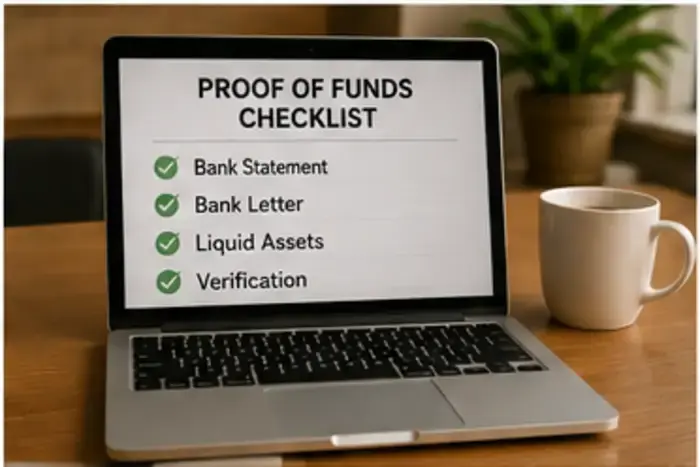
Acceptable proof of funds should identify the buyer or purchasing entity, come from a credible financial source, be reasonably current, and show enough liquid money to support the transaction. Sellers often receive a proof of funds bank statement, a bank letter, or a liquid investment account statement.
| Document | What It Shows | What the Seller Should Check |
| Recent bank statement | Current cash in checking, savings, or similar accounts | Buyer name, date, available balance, institution, and whether sensitive account numbers are safely redacted |
| Bank or financial institution letter | Confirmation from the institution that sufficient funds are available | Letterhead, date, buyer or entity name, amount or sufficiency statement, and contact details when provided |
| Liquid investment account statement | Assets in an account that may be readily converted to cash | Ownership, current value, liquidity, recent date, and whether the timing fits closing |
Proof of liquid funds for real estate should support the closing timeline. A property owned by the buyer may be valuable, but it is not the same as cash that can be wired at settlement. The same is true for assets that have restrictions, long settlement periods, or uncertain liquidation values.
What Should a Proof of Funds Letter Include?
A useful proof of funds letter is short, clear, and verifiable. It normally identifies the account holder or purchasing entity, the financial institution, the date of the letter, and either the available balance or a statement that sufficient funds are available for the transaction. Authorized contact information may also be included when the institution provides it.
A seller does not need a buyer’s full account number to evaluate the document. Sensitive numbers can be redacted while leaving the name, institution, date, and financial confirmation visible. If a buyer searches for a proof of funds letter sample or proof of funds example, the safest model is one that proves capacity without exposing unnecessary private information.
| Simple proof of funds example: Bank letterhead, buyer or entity name, date issued, confirmation that sufficient liquid funds are available for the proposed purchase, and an authorized bank contact or verification method. The exact wording can differ by institution. |
How to Verify Proof of Funds Before Moving Forward
How to verify proof of funds starts with consistency. The name on the document should match the person or entity making the offer. If an LLC is buying the property, the seller should understand the connection between the LLC and the person communicating about the purchase. The document should also be current enough to support the offer and show funds that appear adequate for the price and expected closing needs.
Review the financial institution and formatting as well. A recognizable bank or brokerage and a professionally generated statement or letter generally provide more context than a cropped screenshot with no clear source. If verification is appropriate, it can be coordinated through the buyer, real estate professionals, title or escrow professionals, or the financial institution with proper authorization.
| Red flags to slow down for: The buyer refuses any reasonable financial evidence, the document name does not match the offer, dates or balances look altered, the institution cannot be identified, or the buyer pressures the seller to sign immediately while avoiding normal verification questions. |
Verification is not a guarantee that nothing can change before closing. It is a risk-screening step. Sellers should still review earnest money, contract deadlines, title requirements, and cancellation rights instead of treating one bank document as the whole due-diligence process.
When Should a Cash Buyer Provide Proof of Funds?
The best time is usually before the seller accepts the cash offer or within the specific timing written into the offer or purchase agreement. When to provide proof of funds for a cash offer depends on the transaction, but the seller gains the most protection when financial credibility is checked before the property is committed to the buyer.
If proof is promised after acceptance, the contract should make the timing and consequence clear. A seller should not assume there is one universal Utah deadline. The agreement, brokerage process, title or escrow requirements, and the parties’ negotiated terms can all affect when the evidence is delivered.
Proof of Funds vs Preapproval: What Is the Difference?
Proof of funds vs pre approval comes down to where the purchase money is expected to come from. Proof of funds shows money or liquid assets the buyer already controls. A mortgage preapproval shows that a lender has reviewed information and is willing to consider financing the buyer, subject to lender conditions and final underwriting.
| Proof of Funds | Mortgage Preapproval |
| Shows available cash or liquid assets | Shows conditional borrowing capacity |
| Used for an all-cash purchase or cash portion of a deal | Used for a financed purchase |
| Usually comes from a bank, brokerage, or financial institution | Comes from a mortgage lender |
| Focus is accessible funds | Focus is loan qualification, subject to conditions |
A preapproval letter is therefore not a substitute for proof of liquid cash when an offer is represented as all cash. The seller should evaluate the document that matches the way the offer is supposed to close.
What Utah Sellers Should Check Before Accepting a Cash Offer
A cash offer on house Utah sellers receive should be reviewed as a complete package. Start with the written price and closing date, then confirm the buyer or business identity, proof of funds, earnest money terms, title or escrow process, inspection or due diligence language, and any assignment or cancellation provisions. A fast closing date is useful only when the buyer’s money, title work, and contract terms can support it.
The same checks matter when comparing cash home buyers Utah homeowners may contact directly. A professional presentation does not replace verification. Ask who is actually buying, whether the offer can be assigned, what fees or deductions apply, and what conditions allow the buyer to cancel. If your goal is to sell my house fast Utah, speed should be compared with net proceeds and contract certainty rather than treated as the only measure of a good offer.
| Seller next step: Before accepting a cash offer, place the offer, proof of funds, earnest money terms, and closing timeline side by side. A short comparison can reveal which buyer is offering the strongest combination of price and certainty. |
How Buyers Get a Proof of Funds Letter
A buyer can usually get a proof of funds letter by contacting the bank, credit union, brokerage, or financial institution holding the money. Some institutions provide a standard letter through online banking, while others require a branch or account representative to prepare it. A recent statement may also be acceptable when the seller and transaction process allow it.
A legitimate buyer should generally be able to provide reasonable financial evidence without exposing every private account detail. If the buyer needs time to move funds between accounts, the seller should understand that timing before relying on a very short closing promise.
Frequently Asked Questions
Can a seller ask for proof of funds from a cash buyer?
Yes. A seller can request financial evidence before deciding whether a cash offer is credible. The request is commonly used to confirm that the buyer has accessible funds. The exact document and timing can also be addressed in the offer or purchase contract.
Do cash buyers need proof of funds before an offer is accepted?
There is no single Utah rule requiring the same proof in every cash sale, but a seller may ask for it before acceptance. Providing it early can strengthen a buyer’s offer because the seller can evaluate financial ability before taking the property off the market.
Can a bank statement be used as proof of funds?
Yes, a recent bank statement can be used when it clearly shows the buyer or entity name and enough available funds. Sensitive account numbers can be redacted. Sellers should also check the statement date and whether the money appears sufficiently liquid for closing.
What should a seller do if proof of funds looks unclear or incomplete?
Ask for clarification or updated documentation before relying on the offer. If the name, institution, date, or balance cannot be understood, the seller can request a bank letter or additional verification through the transaction professionals involved.
Verify the Buyer Before You Commit to the Sale
A strong cash offer is more than a price and a quick closing date. Proof of funds for cash offer review helps a seller confirm that the buyer has accessible money and that the proposed timeline is realistic. Compare the financial evidence with the contract, earnest money, title process, and cancellation terms before you commit. If you are considering a direct cash sale in Utah, request a clearly documented offer and compare the expected net result with your other selling options before signing.