

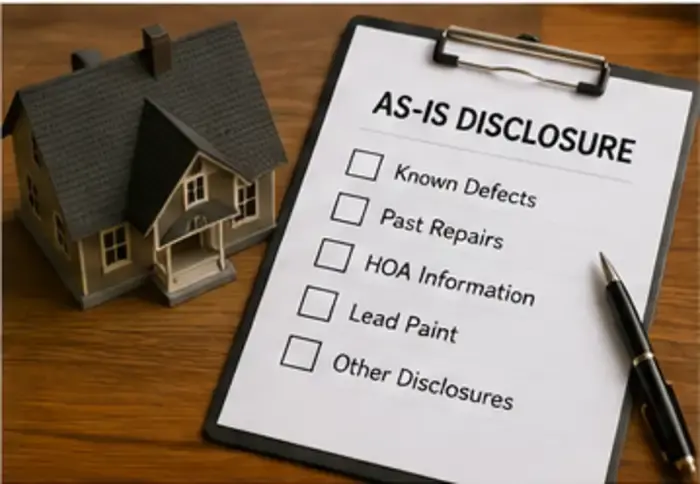
Selling a Utah home as is can mean the seller does not plan to make repairs before closing, but it does not mean known material problems can be hidden. Utah as is disclosure requirements come from a mix of the signed purchase contract, Utah case law, targeted state rules, and federal requirements that apply to particular properties. The standard Utah Real Estate Purchase Contract, or REPC, separates the buyer’s acceptance of the property’s as is condition from the seller’s written disclosure responsibilities. Sellers should understand that difference before they set deadlines or answer buyer questions. This guide focuses on known defects, repair history, HOA records, lead paint, disclosure timing, inspections, and the risks of leaving out material information.
Does Selling a Home As Is Remove the Duty to Disclose?
No. Selling as is generally describes the condition in which the buyer is purchasing the property and the seller’s position on repairs. It does not automatically remove the seller’s responsibility to communicate known material problems when the contract or applicable law requires disclosure.
The standard Utah REPC contains an as is buyer acknowledgement while separately addressing the seller’s written disclosure of certain known material defects. That distinction matters. A seller may decide not to fix a roof leak, foundation issue, or water problem, but the choice not to repair it is different from withholding information the seller already knows. The question “does selling as is avoid disclosure in Utah” should therefore be answered by looking at the signed contract and the specific condition, not by assuming the words as is erase all disclosure duties.
| As Is Means | As Is Does Not Mean |
| The buyer agrees to purchase the property in its current condition under the contract terms | The seller may conceal a known material hidden defect |
| The seller may choose not to make requested repairs | The buyer automatically loses all due diligence or inspection rights |
| Price and negotiations may reflect the property condition | Federal or property-specific disclosure rules disappear |
| The parties can define repair expectations in the contract | Every risk is shifted to the buyer regardless of what the seller knows |
How the Utah REPC Treats an As Is Sale
What the Buyer Accepts
Section 10.2 of the state-approved REPC describes the buyer as purchasing the property in its as is condition. It also gives the buyer an opportunity to inspect and evaluate the property during due diligence. In practical terms, the Utah REPC as is condition tells the buyer to investigate the home and decide whether to proceed based on the contract and the buyer’s own evaluation.
An as is clause does not automatically remove buyer due diligence. The signed contract controls the deadlines and cancellation rights. That is why seller disclosure vs home inspection Utah questions should not be treated as the same issue: one concerns information the seller knows and provides; the other concerns the buyer’s independent investigation.
What the Seller Still Agrees to Do
Section 10.3 separately addresses the seller’s responsibility to disclose in writing certain known defects that materially affect the property’s value and cannot be discovered by a reasonable inspection by an ordinarily prudent buyer. The standard REPC also calls for a written seller property condition disclosure Utah sellers complete under Section 7.
Utah seller disclosure law is not one single universal form statute for every residential transaction. Duties can arise from contract language, court decisions, targeted statutes, and federal rules. Sellers should read the actual agreement they sign instead of assuming one internet checklist applies to every sale.
What Problems Should a Utah Seller Disclose?
Start with the seller’s actual knowledge. A material problem is one that could matter to a reasonable buyer’s decision or price. Do not guess about unknown conditions, but do not minimize a serious known history because the home is being sold as is.
Foundation and Structural Problems
Known foundation movement, structural repairs, recurring cracks, soil problems, or engineering findings can be significant. Foundation issues seller disclosure Utah questions become especially important when the seller has a prior report, repair invoice, or repeated history that a buyer would not discover from a normal walkthrough. If professional documentation exists, accurately describing what the seller knows is safer than replacing it with a vague statement such as “repaired years ago.”
Roof Leaks, Water Damage, and Mold
Known active or recurring roof leaks, past flooding, water intrusion, moisture damage, and known mold conditions can also be material. A roof leak seller disclosure Utah issue does not vanish because the stain was painted. Water damage disclosure Utah home sale questions often turn on the cause, whether it was corrected, and whether the problem returned. The same caution applies to mold disclosure Utah real estate transactions: disclose what is actually known and avoid diagnosing conditions the seller is not qualified to identify.
Past Repairs, Alterations, and Permits
Do sellers have to disclose past repairs Utah buyers may ask about? The commonly used condition disclosure asks about relevant alterations, remodels, permits, and property systems. That does not mean every small repair is automatically a legal defect. The safer approach is to answer the form from actual knowledge and disclose repair history that is specifically requested or material to the buyer’s understanding of the property.
What Goes Into the Seller Property Condition Disclosure?
The standard REPC calls for a completed, signed, and dated written property condition disclosure. The commonly used seller disclosure form Utah transactions rely on covers subject areas such as permits and remodels, water and sewer or septic conditions, moisture, HOA information, systems, and other known material facts. The exact form and transaction can change what is requested.
Complete the form from actual knowledge. “I do not know” is different from “there is no problem.” If you have a prior inspection, engineering report, remediation record, permit, or contractor invoice that relates to a serious condition, ask the transaction professional or attorney whether it should be identified or provided. Vague wording should not be used to hide a condition you understand.
The Utah Association of REALTORS property condition form is a contract-practice document, not a statute by itself. That distinction helps keep the article and the seller’s expectations accurate.
HOA Disclosures When the Property Is in an Association
For an HOA property, gather records early. Utah guidance distinguishes between state-law requirements for covered association properties and the broader package the standard REPC can require. State requirements include recorded governing documents and access to HOA Ombudsman educational materials before closing.
The REPC can add items such as restrictive covenants, rules, recent meeting minutes, a budget, and financial statements. Waiting until the Utah seller disclosure deadline can create avoidable delays.
- Recorded governing documents and CC&Rs that apply to the property.
- Current rules and regulations when required by the transaction.
- Recent HOA budget, financial information, and meeting minutes requested by the signed REPC.
- Information needed to access Utah HOA Ombudsman educational materials when applicable.
HOA disclosure requirements Utah seller obligations should be checked against both the property type and the contract. Not every association sale uses the same document package.
Lead Based Paint Rules for Older Utah Homes
Most housing built before 1978 is subject to federal lead-based paint disclosure rules. Covered sellers must disclose known lead hazards, provide available records, give the required federal pamphlet and warning language, and allow the buyer the required inspection opportunity.
Lead based paint disclosure Utah sellers handle is separate from the general condition form. Selling without repairs does not replace the federal rule, so older-home sellers should use current federal materials and confirm whether an exemption applies.
When Do Utah Seller Disclosures Have to Be Delivered?
The standard REPC does not set one universal number of days for every seller disclosure package. Section 7 requires the documents no later than the Seller Disclosure Deadline, and Section 24 contains the date the parties agree to for that deadline. The Utah seller disclosure deadline is therefore a contract date in a standard REPC transaction rather than a fixed statewide three-day, five-day, or other generic period.
Other rules can have their own timing. Federal lead disclosures must be handled under the federal process, and HOA information may have separate requirements. The seller should read the signed contract and calendar every disclosure date instead of relying on an online article written for a different transaction.
Seller Disclosure and Home Inspection Are Not the Same Thing
Seller disclosure is based on what the seller actually knows and must provide. A home inspection is the buyer’s independent examination. One does not replace the other.
A buyer may find a condition the seller genuinely did not know about. That does not automatically make the disclosure false. But a seller should not use the buyer’s inspection as a reason to omit a known hidden defect. Hidden defects Utah home sale disputes often turn on knowledge, materiality, and what a reasonable inspection could reveal.
What Can Happen When a Known Defect Is Hidden?
Utah courts recognize fraudulent nondisclosure claims when material information is known, a legal duty to communicate it exists, and the other elements are proven. Not every omitted stain, crack, or repair automatically creates liability.
A court can consider what the seller knew, whether a reasonable inspection could find the problem, what the contract required, and what the buyer relied on. You can sell a house as is with known defects Utah, but a known problem should not be concealed when disclosure is required.
If a serious defect is disputed or hard to describe, get Utah real estate legal advice before signing the disclosure.
A Safer Way to Prepare an As Is Disclosure
Utah as is disclosure requirements are easier to handle when paperwork is assembled before the home goes under contract. Review the current condition disclosure, the REPC disclosure sections, and records that explain known conditions.
- Prior inspection, engineering, remediation, or environmental reports that are relevant.
- Invoices and warranties for major repairs, water mitigation, foundation work, roofing, or system replacement.
- Building permits and records for material alterations or remodels when available.
- HOA governing documents and contract-required association records.
- Current federal lead disclosure materials for covered pre-1978 housing.
- Any written update needed if a material condition changes before closing.
For a serious or disputed condition, ask a Utah real estate attorney what your transaction requires before making a representation you are unsure about.
Frequently Asked Questions
Do you have to disclose defects when selling a house as is in Utah?
Known material hidden defects can still require disclosure. The REPC separates the buyer’s as is acknowledgement from the seller’s disclosure responsibility. The exact duty depends on the contract, facts, and applicable law.
Can you sell a house as is with known defects in Utah?
Yes. A known defect does not automatically prevent an as is sale. The seller can decline repairs, but should disclose the condition when the contract or applicable law requires it.
Do Utah sellers have to disclose past repairs?
The commonly used condition disclosure asks about relevant repairs, remodels, permits, and systems. Answer from actual knowledge. Not every minor repair is material, but significant history should not be hidden when requested or material.
Does an as is sale stop the buyer from getting a home inspection?
No. Under the standard REPC, as is language and buyer due diligence are separate. The buyer can still have inspection rights under the signed contract.
What is the seller disclosure deadline in Utah?
In the standard REPC, the parties write the Seller Disclosure Deadline into Section 24. It is not one fixed statewide number of days. Federal lead or HOA disclosures can have separate timing.
Final Takeaway
Selling as is changes repair expectations, not the need for honest written information about known material conditions. Utah as is disclosure requirements should be checked against the current disclosure, signed REPC, and property-specific rules. Gather records early and get legal guidance for serious disputed conditions. Once disclosure is clear, compare selling routes by price, timing, and workload.