
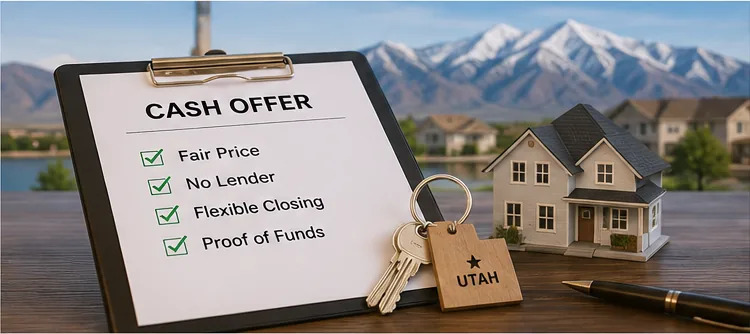
Accepting a cash offer is only the beginning of the home selling process. If you are learning how to sell a house in Utah for cash, expect a written contract, agreed deadlines, seller documents, title work, due diligence, settlement, and recording before the transaction is complete.
Cash removes buyer mortgage underwriting when the purchase is genuinely all cash, but it does not remove every contingency or closing requirement. The safest way to judge the deal is to follow the written contract from offer review through closing and track anything that can change the final proceeds, possession date, or certainty of the sale.
What Changes When the Buyer Is Paying Cash?
A true cash purchase does not depend on the buyer receiving a mortgage approval, so lender underwriting is removed from the process of selling a house. That can simplify one part of the transaction, but it does not mean the sale has no paperwork, inspections, title review, earnest money terms, or negotiated deadlines.
A cash buyer can still negotiate due diligence rights, repair requests, closing costs, title conditions, and a settlement date. The purchase contract controls those rights, not a general internet timeline or a verbal promise that the buyer can close quickly.
When you sell a house in Utah for cash, read the agreement as carefully as you would for a financed offer. The source of funds changes, but the contract still creates the roadmap.
Step 1: Review the Cash Offer Before You Accept
The first steps to selling a house for cash should focus on the complete offer, not only the purchase price. Confirm the buyer’s legal name or purchasing entity and ask how the buyer will show that funds are available. Proof of funds is useful, but it does not by itself guarantee that the buyer will close.
Compare the price with concessions, seller paid costs, repair expectations, earnest money, due diligence rights, assignment language, and the proposed settlement date. Pay special attention to any clause that allows the buyer to reduce the price or cancel after inspection.
Estimate what you are likely to receive after the agreed deductions. A slightly lower offer with clearer terms can sometimes produce more certainty than a higher price that gives the buyer broad rights to renegotiate.
- Buyer name or purchasing entity and evidence of available funds
- Purchase price and any seller concessions or credits
- Earnest money amount and handling
- Due diligence and cancellation rights
- Assignment rights if the contract includes them
- Proposed settlement date and possession terms
- Estimated seller net proceeds after agreed deductions
Step 2: Sign the Contract and Put Every Deadline on the Calendar
Once the agreement is fully signed, save the contract and every addendum. The home selling timeline now comes from the dates in those documents. Utah residential contracts can use deadlines for seller disclosure, due diligence, financing and appraisal when applicable, and settlement. The exact dates are negotiated and should not be replaced with a generic number of days.
A cash transaction may handle financing and appraisal provisions differently, but the written agreement controls. If a provision is marked not applicable, confirm that in the signed contract rather than assuming all cash deals work the same way.
Put every deadline on one calendar and note who is responsible for each item. A verbal promise to close fast matters less than the dates and rights written into the agreement.
Step 3: Deliver the Seller Documents and Start Title Work
Provide the seller disclosures and other documents required by the contract by the stated deadline. The exact package can vary, so use the signed agreement instead of assuming every Utah seller has the same document list.
At the same time, the title or escrow company reviews ownership and searches for matters that can affect transfer of title. Common examples include an existing mortgage payoff, recorded liens, judgments, HOA balances, probate issues, or differences in how ownership is shown in the record.
If the seller expects a short cash closing, early title work is especially important. A fast buyer cannot record a clean transfer if an unresolved title issue still has to be fixed.
Step 4: The Buyer Completes Due Diligence
Cash does not eliminate due diligence. Depending on the contract, the buyer may inspect the property, review condition, title information, HOA documents, repair estimates, measurements, access issues, and other matters allowed by the agreement.
The buyer’s right to cancel, object, ask for changes, or continue is controlled by the exact contract language and deadline. A cash buyer may still order a home inspection even when there is no lender appraisal requirement.
Sellers sometimes see search phrases such as “due diligence documents delivery deadline” or “due diligence documents objection deadline.” Those phrases should not be treated as universal Utah residential deadline names. Use the labels and dates that actually appear in the signed contract.
If the buyer makes a formal request, respond in writing through the method required by the contract or transaction professional.
Step 5: Decide What Happens After Due Diligence
After inspections and document review, the buyer may proceed as written, request a price or term change, ask for repairs or a credit, or use a valid contractual right to cancel. The seller does not automatically have to accept an inspection based price reduction. The contract determines each side’s rights.
Evaluate any proposed change by its effect on net proceeds and certainty of closing. A repair credit, price reduction, or changed possession date may be reasonable in one deal and unnecessary in another. If both sides agree to a change, put it in a written addendum rather than leaving it in a text message or verbal conversation.
Step 6: Confirm Your Payoff, Closing Costs, and Expected Net
Before settlement, review what will actually be deducted from the sale proceeds. The title or escrow process may include obtaining the mortgage payoff and identifying amounts that must be paid or credited at closing. A mortgage payoff is debt being satisfied, not the same thing as a selling expense.
Seller closing costs in Utah can include transaction specific charges, negotiated credits, taxes or assessments, liens, HOA items, and title or escrow charges allocated to the seller. There is no single statewide seller percentage that should be applied to every cash transaction.
Ask for a preliminary settlement or seller net statement and compare it with the offer you accepted. This is the point to catch an unexpected fee or credit before final documents are signed.
Step 7: Settlement and Closing Are the Final Two Stages
In Utah, settlement and completed closing should not be treated as identical moments. Settlement is the stage when required documents are signed and required funds are delivered according to the contract and escrow instructions. Closing occurs after the contract’s closing conditions are completed, including recording of the applicable documents.
That distinction matters for possession and proceeds. Ask the title or escrow company when funds are expected to be available under its process rather than relying on a guaranteed hour.
Wire fraud is also a real transaction risk. If you receive wiring instructions or a last minute change, verify the instructions independently with the title or escrow company using a trusted phone number. Do not rely only on an email requesting that money be sent to a new account.
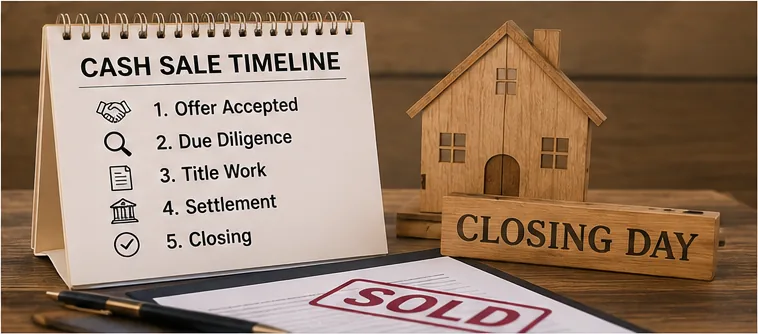
What a Utah Cash Sale Timeline Can Look Like
A useful timeline shows the order of events without inventing universal deadlines:
- Contract accepted. The signed agreement becomes the working roadmap.
- Early transaction. Earnest money, title or escrow opening, seller documents, and title review begin as required.
- Before the Due Diligence Deadline. The buyer completes allowed inspections and investigations and makes any contract permitted request or decision.
- Before settlement. Title issues, payoffs, agreed changes, and final figures are completed.
- Settlement. Required signing and delivery of funds occurs.
- Closing. Required recording and final closing conditions are completed.
There is no single statewide answer for how long a cash home sale takes. The contract deadlines, title condition, due diligence, seller documents, liens, ownership issues, and closing logistics control the actual timing. If you want to quote an average time to sell a house in Utah, use current dated local market data rather than an old statewide estimate.
How This Differs From Selling Through a Traditional Listing
A direct cash sale usually begins with an offer and moves into contract review, title, due diligence, settlement, and closing. A traditional listing adds pricing, property preparation, marketing, showings, offer comparison, and often buyer financing before the final closing stages.
Neither route is automatically better. A traditional listing may provide broader market exposure, while a direct cash offer may reduce preparation or financing risk. Compare the likely price, condition requirements, fees, timeline, and expected net proceeds for the property rather than choosing based on speed alone.
Frequently Asked Questions
What Is the Process of Selling a House for Cash in Utah?
The basic sequence is to review the offer, sign the contract, deliver required seller documents and begin title work, move through the buyer’s due diligence rights, then complete settlement and closing. The signed contract supplies the actual deadlines.
Does a Cash Buyer Still Get a Due Diligence Period in Utah?
It depends on the written purchase contract. Paying cash does not automatically remove inspections, due diligence, objections, or cancellation rights. Review the exact due diligence provisions and deadline in the signed agreement.
How Long Does a Cash Home Sale Take in Utah?
There is no single statewide timeline. Contract dates, title condition, inspections, seller documents, liens, probate or ownership issues, and the title or escrow process can all change the closing date.
What Closing Costs Can a Utah Seller Have in a Cash Sale?
Possible seller items include agreed credits, title or escrow charges allocated to the seller, taxes or assessments, liens, HOA amounts, prorations, and transaction specific costs. The contract and preliminary settlement statement show what applies to the actual deal.
When Is a Utah Home Sale Actually Closed?
Signing at settlement is an important step, but completed closing occurs after the contract’s closing conditions are satisfied, including recording of the applicable documents. Ask the title or escrow company how that timing affects possession and release of proceeds.
Final Takeaway
The safest way to understand how to sell a house in Utah for cash is to read the full offer and follow the contract from due diligence through settlement and recording. Compare the expected net proceeds, buyer rights, title requirements, seller costs, and realistic timeline together. If you are considering a cash offer, get a written comparison of the terms before accepting so you know what can change and what you should expect at closing.