
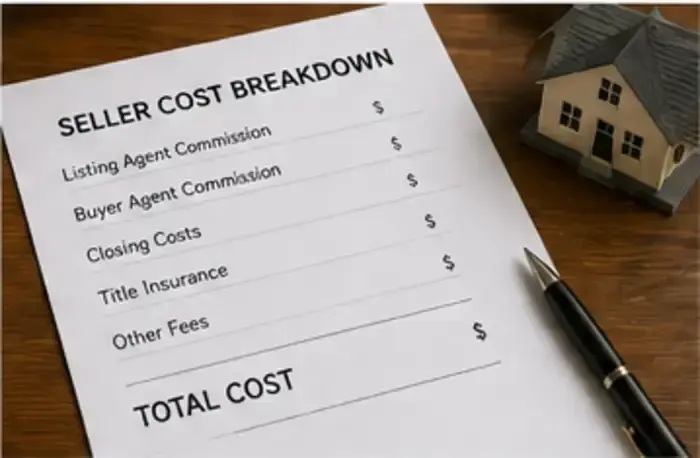
Utah real estate commission is often one of the largest negotiated costs connected with selling a home, but there is no single legally fixed percentage that every seller must pay. The actual amount depends on the seller’s listing agreement, the service model chosen, and whether the seller agrees to contribute toward a buyer’s brokerage compensation. That is only one part of the cost of selling a house in Utah. Title and escrow charges, concessions, repairs, property tax prorations, HOA items, and mortgage payoff costs can also affect the final proceeds. This guide separates those categories so Utah homeowners can compare agent services, current compensation rules, and lower-cost selling options without assuming one universal rate.
How Much Do Utah Sellers Pay in Real Estate Commission?
There is no state-set Utah commission rate. Real estate commission rates Utah sellers see are negotiated between consumers and brokerages, and different service models can charge in different ways. That means questions such as “what percentage do Realtors charge in Utah” or “how much is Realtor commission in Utah” do not have one legally required answer.
A seller should start with the listing agreement. It should state the listing brokerage compensation and the services covered. Buyer brokerage compensation is a separate issue and should be evaluated through the buyer’s agreement and any seller contribution requested or negotiated in the transaction.
Use a Simple Dollar Example
Example only: assume a seller agrees to a 2.5% listing brokerage fee on a $500,000 sale. The listing fee would be $12,500. If the seller separately agrees in the purchase contract to contribute $8,000 toward the buyer’s brokerage compensation, the combined brokerage-related amount in this example would be $20,500. Neither percentage nor contribution is a required Utah rate. The example simply shows why sellers should translate every agreed fee into dollars before signing.
An average Realtor commission Utah survey may be useful as a market reference, but surveys use different samples and methods. A current survey number should never be presented as a legal standard or a guaranteed quote.
What Is Included in a Real Estate Commission?
Real estate agent commission Utah sellers negotiate normally pays for brokerage services rather than one single task. The scope can differ by firm and agreement, so the fee should be read together with the service package.
Listing Agent Commission
The listing agent commission Utah seller agrees to may cover pricing guidance, MLS exposure, photographs or marketing coordination, showing management, buyer communication, offer review, negotiation, contract-to-closing coordination, and other services listed in the brokerage agreement. Some firms include more services; others use reduced or limited-service models.
Buyer Agent Compensation
Buyer agent commission Utah discussions are separate. A buyer generally has a written agreement with the buyer’s brokerage describing compensation. A seller may agree to contribute toward that amount as part of the transaction, but the contribution should not be described as an automatic or legally fixed seller charge.
| Cost Item | Who Agrees to It? | Negotiable or Variable? |
| Listing brokerage fee | Seller and listing brokerage | Negotiable |
| Seller contribution toward buyer brokerage | Negotiated through transaction terms when requested | Negotiable |
| Title and escrow charges | Allocated by contract, provider, and transaction | Variable |
| Repairs, credits, or concessions | Buyer and seller through negotiation | Negotiable |
| Taxes, HOA, payoff, and property-specific items | Depends on the property and closing | Variable |
Who Pays Realtor Fees When a Utah Home Sells?
The seller generally pays the listing brokerage according to the signed listing agreement. Whether the seller also pays or contributes toward the buyer’s brokerage depends on the buyer’s agreement and the terms negotiated in the purchase transaction. That is the clearest way to answer “who pays Realtor fees in Utah.”
Does seller pay Realtor fees in Utah? The seller pays whatever seller-side brokerage compensation the seller has agreed to. The seller may also authorize a contribution toward buyer brokerage compensation, but that should be documented rather than assumed. A buyer may also be responsible for compensation under the buyer’s written agreement when other negotiated sources do not cover the amount.
Because the two sides are separate, a seller should avoid treating a combined commission number as if it were one automatic charge. Read the listing agreement and purchase terms individually.
What Changed After the NAR Settlement?
The practice changes that took effect in August 2024 changed how buyer-broker compensation is communicated through many MLS systems. Offers of buyer-broker compensation are no longer made through NAR-affiliated MLSs. Written buyer agreements are also required for many MLS participants before touring, and those agreements must clearly address compensation.
For a Utah seller, the practical point is not that commissions disappeared. They did not. Broker compensation remains negotiable, and a seller may still agree to contribute toward a buyer’s brokerage compensation when the parties choose to structure the transaction that way. Utah forms can allow a buyer to request such a seller payment as part of the offer.
The phrase NAR settlement Utah real estate commission should therefore lead to a current explanation: compensation is separated more clearly, offers of buyer-broker compensation are not displayed in the MLS, written agreements matter, and the parties still negotiate what is paid and by whom.
Commission Versus Other Seller Closing Costs in Utah
Seller closing costs Utah homeowners see on a settlement statement are broader than brokerage compensation. Closing costs for seller in Utah transactions can include title and escrow-related charges, prorated property taxes, agreed seller concessions, HOA or change-of-ownership charges, payoff-related items, repairs or credits, and other property-specific expenses.
The mortgage payoff should also be separated mentally from the fee for selling. It reduces the cash a seller receives at closing because an existing debt is being repaid, but it is not a brokerage commission. The same distinction helps when estimating how much are seller closing costs in Utah because some charges are transaction expenses while others are existing obligations.
Do not combine every possible item into one universal percentage. The amount can change with the property, county, contract, service provider, closing date, loan, HOA, and negotiated concessions.
Are Realtor Commissions Negotiable in Utah?
Yes. Real estate brokerage compensation is negotiable. A Utah seller can discuss the listing fee, the services included, the contract term, cancellation terms, marketing plan, communication expectations, and whether any additional compensation is authorized before signing the agreement.
If the goal is how to lower Realtor commission in Utah, compare value rather than percentage alone. A lower fee can make sense when the service level fits the seller’s needs. It can also be a poor trade if the seller expects services that are not included. Ask for the total fee structure in writing and confirm whether photography, MLS changes, open houses, transaction coordination, or other services carry separate charges.
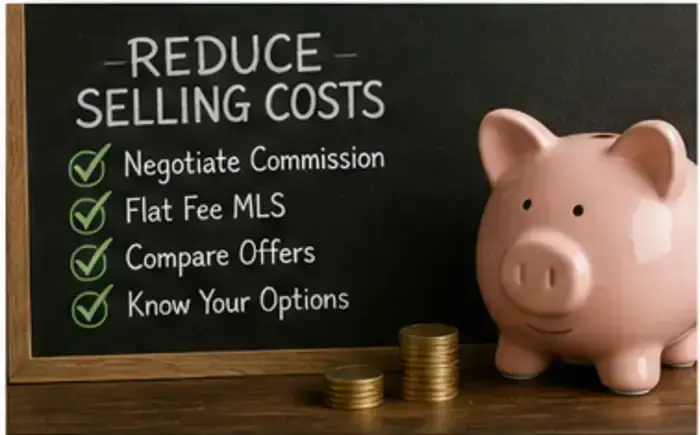
Ways to Lower the Cost of Selling a House in Utah
Negotiate the Listing Fee
Compare qualified brokerages based on both fee and service scope. A seller with a straightforward property and strong local knowledge may want a different package from a seller handling probate, major defects, tenant issues, or a difficult title problem.
Consider a Low Commission Realtor
A low commission Realtor Utah seller chooses may offer a reduced listing fee or a different service model. Check what is included, whether support changes after the listing goes live, and whether there are administrative, closing, or upgrade charges that affect the true cost.
Compare Flat Fee MLS Options
A flat fee MLS Utah service can reduce listing-side costs for a seller comfortable managing more of the process. The seller may still handle pricing, inquiries, showings, offer review, negotiations, disclosures, and transaction coordination depending on the package. Compare listing term, photo limits, change fees, lead forwarding, forms, and cancellation terms.
Sell Without a Listing Agent
Selling without a listing agent may avoid a traditional listing brokerage fee, but it does not remove the work. The seller still needs a pricing strategy, marketing, buyer screening, contracts, disclosures, negotiations, closing coordination, and a plan for any buyer brokerage request. “How to avoid Realtor fees in Utah” should therefore be evaluated as a workload and risk decision, not just a fee question.
How to Estimate Your Net Proceeds Before Listing
A seller net sheet is more useful than focusing on commission alone. Start with the expected sale price, subtract the mortgage payoff, then subtract agreed brokerage compensation, seller closing costs, concessions or credits, and other sale expenses. The result is an estimate of the cash the seller may receive.
| Simple proceeds formula: Sale price minus mortgage payoff minus agreed brokerage compensation minus seller closing costs minus concessions, credits, and other sale expenses equals estimated seller proceeds. |
Use the same assumptions when comparing selling strategies. If one option has a lower fee but a different sale price, repair requirement, or buyer concession, compare the estimated net result rather than the headline percentage.
When Paying for Full Service Representation May Make Sense
Full-service representation can be worth considering when a seller wants hands-on pricing strategy, broad marketing, showing management, negotiation support, or close transaction coordination. It can also be useful when the property has title issues, multiple owners, major defects, tenants, estate complications, or a difficult timeline. The question is not whether full service is always better. It is whether the services provided are worth the agreed cost for that specific sale.
Frequently Asked Questions
How much do Realtors charge in Utah?
There is no legally fixed Utah rate. Brokerage fees vary by firm, service level, property, and negotiation. Ask the agent to state the listing fee and included services in writing, and keep any buyer brokerage contribution separate when comparing the total cost.
How much are Realtor fees in Utah?
The total can include a seller’s listing brokerage fee and, if negotiated, a seller contribution toward the buyer’s brokerage. Those should be reviewed separately. Other seller closing costs are different expenses and should not be automatically added into a single commission percentage.
Does the seller pay Realtor fees in Utah?
The seller generally pays the listing brokerage according to the listing agreement. Buyer brokerage compensation depends on the buyer agreement and any seller or listing brokerage contribution negotiated for the transaction. A seller contribution is possible, but it is not automatic.
How much are seller closing costs in Utah?
Seller closing costs vary by property, contract, provider, HOA, loan payoff, concessions, taxes, and closing date. The most useful approach is to request an estimated seller net sheet that separates brokerage compensation from title, escrow, tax, HOA, and property-specific charges.
Can a Utah seller use a flat fee MLS service?
Yes. A flat fee MLS service can provide MLS exposure while the seller handles more of the transaction. Package terms vary, so compare photo limits, listing changes, showing tools, support, cancellation terms, and any additional fees before choosing the service.
Final Takeaway
Utah real estate commission is not one fixed percentage. The seller’s actual cost depends on the listing agreement, any negotiated contribution toward buyer brokerage compensation, other closing expenses, and the selling method chosen. Before signing a listing agreement, compare the total services and dollars involved, not just a percentage. Ask for a seller net sheet using realistic sale-price and cost assumptions so you can see what each option may leave you with at closing.