

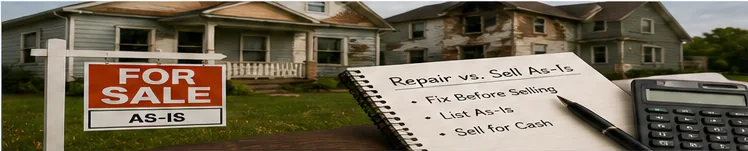
A house can need work without needing a complete renovation. That is why the decision to sell house as is or fix it up should start with the numbers, not with a list of cosmetic upgrades. A Pennsylvania owner may be dealing with a leaking roof, an older electrical system, foundation concerns, mold, code issues, or simply years of deferred maintenance. The right path depends on how serious the problems are, what repairs would cost, how long the work may take, and what each route is expected to net. This guide explains how to sell a house that needs repairs without assuming that fixing everything or selling immediately is always the better answer.
What Selling As-Is Means in Pennsylvania
Selling as-is generally means the property is offered in its current condition and the seller is not promising to complete repairs before closing. It does not mean the seller can hide known problems, and it does not automatically eliminate a buyer’s inspection rights under the purchase agreement. Pennsylvania’s Real Estate Seller Disclosure Law requires covered sellers to provide a property disclosure statement addressing known material defects before the agreement of transfer, subject to statutory exceptions. The words as-is describe the seller’s repair position; they do not replace the Pennsylvania property disclosure statement or the contract.
Should You Fix the House or Sell It As-Is?
If you are asking, should I fix my house before selling, compare six things: repair budget, urgency, severity of the problem, likely improvement in sale price, carrying costs, and renovation risk. A small repair that removes an obvious buyer objection may improve marketability. A large project with an uncertain scope can do the opposite if costs grow or the sale is delayed. The decision to sell house as is or fix it up is strongest when it is based on expected net proceeds rather than a belief that renovated homes always make more money.
When Fixing the House May Make Sense
Limited repairs can make sense when the work is clearly defined, the seller has time and cash, and correcting the issue is likely to improve financing options or buyer confidence. Repairing an active leak, restoring an essential system, or addressing an obvious safety issue can be more valuable than a full cosmetic remodel.
When Selling in Current Condition May Make More Sense
Selling in current condition may fit an inherited or vacant property, a home with large repair bills, a tight timeline, limited cash, or a project whose scope is uncertain. It can also fit a seller who simply does not want to manage contractors and hold the property through construction.
Repairs Worth Considering Before You List
When deciding what to fix before selling a house, start with active problems and safety concerns. A roof that is currently leaking, unsafe electrical conditions, a failed heating system, or damage that will worsen while the home is marketed deserves more attention than purely decorative work. Home improvements before selling should have a clear purpose: protect the property, remove a major objection, or improve the likely net result.
Fix Active Problems Before Cosmetic Upgrades
Selling a house with roof damage is easier to evaluate when the seller knows whether the issue is a limited repair or a full replacement. The same principle applies to plumbing leaks, failed equipment, and electrical hazards. Stop damage from getting worse before spending on finishes.
Small Improvements That Can Help Presentation
Cleaning, minor patching, simple maintenance, yard cleanup, and inexpensive presentation work can help buyers see the property more clearly. These changes cost less than a remodel and can improve first impressions without creating a large project.
What Not to Fix When Selling a House
What not to fix when selling a house usually includes expensive taste-specific upgrades, replacing usable features only because they look dated, and starting a major project without a reliable scope or budget. A new luxury kitchen may raise the asking price, but it also ties up cash and may not return the full cost. If you are considering whether to renovate before selling, separate work that solves a problem from work that simply changes style.

Problems That Can Change the Best Selling Strategy
Foundation or Structural Problems
Selling a house with foundation problems can narrow the buyer pool because repair costs may be large or uncertain. A structural evaluation or reliable estimate can help a seller compare the cost of repair with an as-is price and can reduce guesswork during negotiation.
Mold, Water Damage, and Roof Problems
Selling a house with mold or active water damage requires attention to the moisture source, not just the visible stain. Buyers will want to know whether the condition is active, whether remediation was completed, and whether the roof, basement, plumbing, or drainage still allows water in.
Code Violations or Deferred Maintenance
Selling a house with code violations in Pennsylvania can involve local rules that differ by municipality. A seller should check the exact local requirement rather than rely on a statewide assumption about inspections, certificates, or transfer rules. Deferred maintenance can also affect price even when there is no formal code case.
How Much Do You Lose Selling a House As-Is?
There is no reliable statewide percentage for how much you lose selling a house as is. The price difference depends on the type of damage, repair cost, local comparable sales, financing options, buyer demand, and uncertainty. A better comparison is: expected repaired sale price minus repair costs, carrying costs, selling costs, and concessions versus the expected net proceeds from an as-is sale. That shows whether the higher headline price after repairs actually leaves the seller with more money.
Inspections and Seller Disclosures in Pennsylvania
A pre-listing home inspection in Pennsylvania is a strategy choice, not the same thing as the seller’s statutory disclosure duty. A seller may order an inspection to identify issues before setting a price, but the Pennsylvania seller disclosure requirements focus on known material defects for covered transfers. State law generally requires the property disclosure statement to be delivered before the agreement of transfer, subject to exceptions. An as-is clause does not erase that responsibility.
Do You Need a Pre-Listing Inspection?
No single strategy fits every property. A pre-listing inspection can help when the seller wants more certainty about condition and repair scope. It can be less useful when the major defects are already known and the seller plans to market the property in current condition.
Known Defects Still Need Careful Disclosure
If you are asking whether you have to disclose defects when selling a house in Pennsylvania, the key point is known material defects. Covered sellers should use the current Pennsylvania property disclosure statement and answer accurately. Transaction-specific legal or real estate guidance is appropriate when an exemption or unusual condition may apply.
Ways to Sell a Pennsylvania House That Needs Work
Make Selected Repairs and List on the Market
This route can fit a seller who has time, cash, and a clearly defined repair plan that is likely to improve marketability or net proceeds. It also gives the seller access to the broadest range of retail buyers if the condition supports conventional financing.
List the Property As-Is
Listing as-is can preserve open-market exposure without committing the seller to repairs in advance. Buyers may still inspect, negotiate, or request credits based on the contract. Pricing should reflect condition rather than assuming buyers will pay renovated value.
Consider a Direct Sale in Current Condition
A direct sale may fit a seller who values simplicity, fewer showings, or less repair management. If you need to sell a damaged house in Pennsylvania or sell distressed property, compare written offers, seller-paid fees, contingencies, and net proceeds rather than choosing only on convenience.
Pros and Cons of Selling a House As-Is
- Pros: lower upfront spending, less contractor management, fewer preparation tasks, and the ability to market a property without completing a full renovation.
- Cons: a smaller buyer pool for some properties, condition-adjusted offers, possible financing limitations, and less negotiating leverage when repair scope is uncertain.
The pros and cons of selling a house as is should be measured against the seller’s actual budget and timeline. A route that is less work can still be financially sensible if the cost and risk of repairing are high.
A Quick Way to Decide Before You Spend on Repairs
- How urgent is the sale?
- What are the confirmed repair costs rather than rough guesses?
- What could the repairs realistically add to the sale price or buyer pool?
- What will taxes, insurance, utilities, interest, and maintenance cost while the work is completed?
- Which route produces the better estimated net proceeds at a level of risk you can accept?
Frequently Asked Questions
Can You Sell a House As-Is Without an Inspection in Pennsylvania?
A seller does not necessarily need to order a pre-listing inspection. A buyer may still have inspection rights under the purchase contract, and seller disclosure obligations are a separate issue.
How Much Do You Lose Selling a House As-Is?
There is no universal percentage. Compare condition, repair cost, local comparable sales, buyer demand, financing, carrying costs, and the expected net from each selling route.
What Should You Fix Before Selling a House?
Prioritize active damage, safety problems, essential systems, and repairs that clearly improve marketability. Be more cautious about expensive cosmetic remodeling that may not return its full cost.
Do You Have to Disclose Defects When Selling a House in Pennsylvania?
Covered sellers generally must disclose known material defects through the state property disclosure process before the agreement of transfer, subject to statutory exceptions.
Can You Sell a House With Mold or Foundation Problems?
Yes, but the condition can narrow the buyer pool and affect price. Reliable evaluations and repair estimates can help the seller compare repair-first, as-is listing, and direct-sale options.
Conclusion: Choose the Option That Protects Your Net Proceeds
The choice to sell house as is or fix it up should come back to the same five factors: repair cost, time, risk, legal disclosure, and expected net proceeds. Do not renovate simply because a home is dated, and do not assume selling as-is always produces the best result. Compare realistic numbers before committing to a project. If a direct as-is offer is available, place its written net beside the estimated net from repairing and listing so you can make the decision on the full financial picture.