


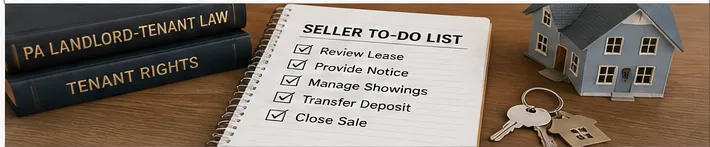
Selling a rental property with a tenant in Pennsylvania is possible, but the lease and the tenant’s legal status affect how the sale should be handled. The owner can transfer the real estate while it is occupied, yet the sale should not be treated as an automatic end to the landlord tenant relationship.
A clean sale starts by reviewing the lease, confirming the tenancy type, planning showings, and organizing records for the buyer. If there are unpaid rent issues, possession proceedings, or belongings left behind, those matters need their own lawful process. This guide focuses on the practical decisions a Pennsylvania landlord should make before listing and closing an occupied rental.
Can You Sell a Rental Property With a Tenant in Pennsylvania?
Yes. A landlord can sell a property with tenants, and the buyer can take ownership while the rental relationship continues. Pennsylvania law gives a purchaser rights and duties relating to the property that follow the prior owner’s position, so the buyer needs to know what lease and possession obligations come with the purchase.
The important point is that selling the property and recovering possession are different issues. If a landlord sells the property, the seller should not promise that the tenant will automatically leave simply because title changes.
Before choosing a buyer strategy, confirm the lease term, payment status, deposits, notices, and any pending dispute. The lease is the first document that tells you what the buyer is actually buying along with the real estate.
Check the Lease Before You List the Property
Fixed Term Lease
For a fixed term lease, review the remaining term, rent amount, renewal language, access provisions, and any sale or early termination clause. The seller should not assume that an ordinary sale gives an immediate right to remove the tenant. If the buyer needs vacant possession, confirm that the lease and legal process can support that result before accepting the offer.
Month to Month Rental
A month to month tenancy can offer more flexibility, but termination still depends on the lease, Pennsylvania law, and any applicable local rules. Avoid using one blanket notice period for every month to month situation. A landlord selling a house month to month should identify the reason for ending possession and the exact notice requirement before setting a move out date.
Clauses That Can Affect the Sale
Look for clauses covering entry for showings, notice, renewal, early termination, and any tenant purchase option or right that could affect the sale. Read the actual wording instead of relying on a generic rule. A short lease review before marketing can prevent a much larger problem if a buyer later demands a possession date the seller cannot deliver.
What Rights Do Tenants Have During the Sale?
The Existing Tenancy Still Matters
Tenant rights when a landlord sells property continue to matter during marketing and closing. Changing ownership does not allow the seller to ignore the lease, possession rights, rent terms, or maintenance duties. The tenant should continue to receive the services and protections required by the rental agreement and applicable law.
Showings and Property Access
Check the lease and local rules before stating a specific entry notice period. Pennsylvania should not be described as having one universal statewide 24 hour rule for every showing. A practical approach is to provide clear written notice, use reasonable time windows, and group appointments where possible.
Repeated surprise visits can create conflict and make the property harder to sell. A consistent showing plan gives the tenant time to prepare and gives buyers a better chance to see the home under reasonable conditions.
Communication Before and After Closing
Tell the tenant what is changing and what is not. During the sale, identify the person handling showings and maintenance. At closing, make clear who will collect rent, where notices should be sent, and who will manage repairs after the transfer. Good written communication is one of the simplest ways to reduce disputes between the old owner, new owner, and tenant.
Sell With the Tenant in Place or Wait for Vacancy?
An occupied sale may fit a stable tenant, a clean payment history, and an investor buyer who wants income from the first day of ownership. It can also reduce the period in which the seller carries a vacant property.
Waiting for vacancy may make more sense when the property needs substantial repairs, access is difficult, the lease is close to ending, or the likely buyer wants to live in the home. When selling a rental property, compare the remaining lease term, repair needs, buyer pool, carrying costs, and expected net proceeds instead of assuming one path always produces a better result.
The purchase contract should reflect the choice. If the tenant is staying, say so clearly. If vacant possession is required, make sure the seller can lawfully deliver it by the agreed date.
What If the Tenant Is Not Paying or Causing Problems?
Do Not Use the Sale as a Shortcut Around the Legal Process
A problem tenant home sale can still happen, but nonpayment, lease breaches, and possession disputes should be handled through the proper process. The owner should not change locks, remove belongings, shut off utilities, or pressure the tenant out simply to make the property easier to sell.
A buyer needs an accurate picture of the situation. Disclose the tenancy status, unpaid rent, notices, court activity, and any agreement that may affect possession. Hiding a problem until closing can create a contract dispute or cause the buyer to change terms late in the transaction.
When an Order for Possession Becomes Relevant
An order of possession in Pennsylvania is part of the formal landlord tenant court process after required steps have occurred. It is not created simply because an owner decides to sell. Keep the sale strategy separate from the possession case and use Pennsylvania court terminology accurately.
If a possession matter is already pending, the seller should understand what stage it is in and how it affects the buyer’s expectations. A Pennsylvania attorney can review the case when the timing or legal effect is unclear.
What If the Tenant Leaves Belongings Behind?
Abandoned personal property is a separate issue from ownership of the real estate. Pennsylvania law sets conditions for when tenant belongings may be treated as abandoned and requires a written notice before certain removal or disposal steps.
The current statutory framework gives the tenant time after the notice is mailed to retrieve the property or request storage. The outline for this article uses a 10 day period from the notice postmark to retrieve or request storage, with requested storage available for up to 30 days from the notice. Because abandoned property rules can change and the facts matter, verify the timing before acting.
Do not assume that items are legally abandoned just because the tenant appears to have moved. Keep an inventory, photographs, copies of notices, and storage records so the seller can show what was done if the issue continues into the sale.
A Simple Process for Selling the Property With Tenants
Review the Lease and Tenant Status
Confirm lease dates, rent, deposits, payment history, notices, and any active dispute. This defines the occupancy terms a buyer will inherit and identifies problems that should be solved early.
Speak With the Tenant Before Marketing
Explain that the property is being sold, how showings will be arranged, and who will answer questions. Do not promise a move date unless it is supported by the lease, valid notice, or a signed agreement.
Choose the Right Buyer Strategy
An investor focused occupied sale may work when the lease is stable. A vacant sale may be stronger when repairs or owner occupancy matter. Match the marketing plan to the tenancy instead of trying to make the tenancy fit a buyer after the offer arrives.
Prepare the Buyer File
Gather the lease, amendments, payment records, notices, maintenance information, deposit records, and appropriate tenant contact details. Organized documents help the buyer evaluate the property and reduce repeated requests to the tenant.
Handle Problems Before Closing
Resolve avoidable lease, access, rent, or possession issues before they become closing surprises. If a legal dispute is active, give the buyer accurate information and make the purchase contract clear about who carries the risk after closing.
Make the Handoff Clear
Document who will receive rent, handle maintenance, hold relevant tenancy records, and communicate with the tenant after the transfer. Reconcile any prepaid rent, credits, and deposits in the closing file.
Frequently Asked Questions
Can a Landlord Sell the House You’re Renting in Pennsylvania?
Yes. A landlord can sell an occupied rental, but the sale does not automatically erase the lease or possession rights. The buyer needs to understand the existing tenancy and the duties that come with acquiring the property.
Does a Tenant Have to Move Because the Landlord Sells the Property?
Not simply because of the sale. The tenant’s right to remain depends on the lease, tenancy status, valid notice, and any lawful possession process. A seller should not promise vacancy until those facts have been checked.
What Happens If the Tenant Is Month to Month?
A month to month tenancy may give the landlord more timing flexibility than a long fixed lease, but notice and termination still have to follow the lease, Pennsylvania law, and applicable local rules. There is no one sale notice rule for every situation.
Can You Sell a House With a Problem Tenant?
Yes. A buyer may purchase the property with a difficult tenancy, or the owner may resolve a genuine lease or possession issue before selling. The sale should not be used as a substitute for the proper nonpayment, breach, or possession process.
When Is a Tenant’s Personal Property Considered Abandoned in Pennsylvania?
Pennsylvania law defines conditions for treating tenant property as abandoned and requires notice and retrieval or storage steps. Do not decide based only on appearance. Confirm the current statutory conditions and timing before moving or disposing of belongings.
Choosing the Best Sale Option
The main choices are to sell with the tenant in place, wait for vacancy, or resolve a real tenancy problem before marketing. For selling a rental property with a tenant, compare buyer demand, lease timing, access, repair needs, carrying costs, and contract risk before deciding. If you want a second view, compare an occupied sale with a traditional vacant listing using the same expected net proceeds and timeline.
This article provides general information. Lease terms, local rules, and the facts of a dispute can change the result, so legal questions should be reviewed by a Pennsylvania attorney.