
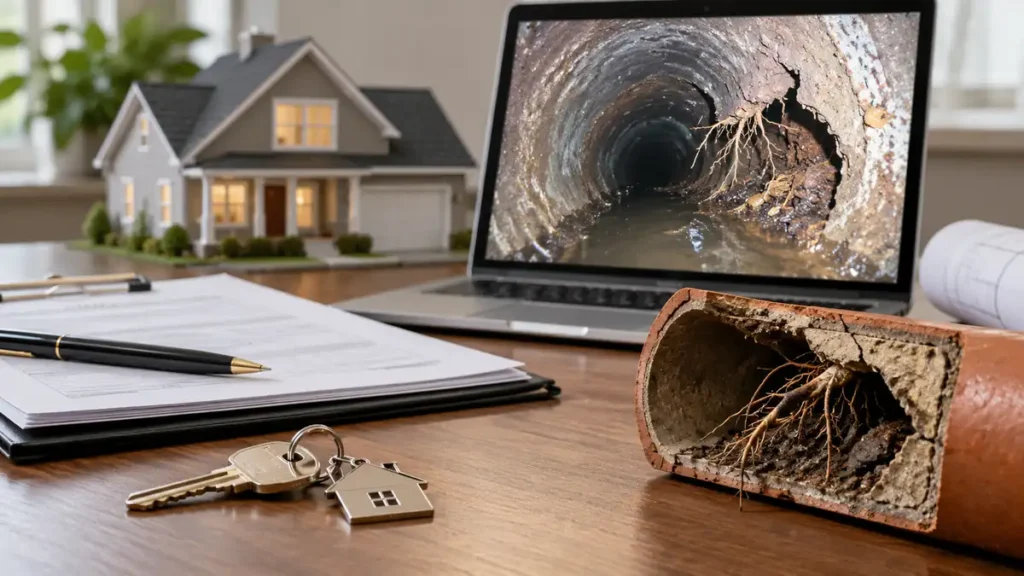
A Pittsburgh home can be under contract when a dye test, sewer scope, or plumber’s inspection suddenly raises a sewer problem. The next step depends on what actually failed. An illegal stormwater connection found through the City dye-compliance process is different from a cracked, root-filled, offset, or collapsed private sewer lateral found by camera. Those findings can affect repair responsibility, buyer negotiations, financing, and the closing date in different ways. Before agreeing to a credit or promising repairs, confirm the property’s municipality, identify the exact finding, obtain written documentation, and learn whether municipal clearance is required before transfer. That sequence helps sellers avoid treating every sewer problem as the same closing issue.
Can You Sell a Pittsburgh House With a Sewer Lateral Problem?
Often, yes, but the answer depends on the problem and municipality. A physical defect in the private lateral may be negotiable between buyer and seller when the contract, lender, title provider, and local rules allow it. A municipal compliance requirement is different. For property inside the City of Pittsburgh, the seller must complete Pittsburgh Water’s Evidence of Compliance process before the property is sold.
| Issue | Main Question | Typical Closing Focus |
| Municipal dye-compliance finding | Is there an illegal stormwater connection to a sanitary sewer? | Agency review, correction, retest, and compliance certificate |
| Damaged private sewer lateral | Is the buried pipe cracked, blocked, offset, collapsed, or invaded by roots? | Repair scope, buyer negotiation, lender concerns, cost, and timing |
An as-is contract does not automatically override a City compliance requirement. Likewise, a broken private pipe does not automatically mean the sale must be cancelled. The practical path comes from the written finding, municipal rules, purchase agreement, buyer expectations, and financing conditions.
Dye Test or Sewer Camera Inspection: Which Problem Did You Find?
The phrase failed sewer inspection can describe two different tests. A dye test checks where stormwater goes. Dye is introduced into gutters, driveway drains, yard drains, or other drainage points to determine whether stormwater is illegally entering a sanitary sewer. The concern is system compliance, not the structural condition of every foot of buried pipe.
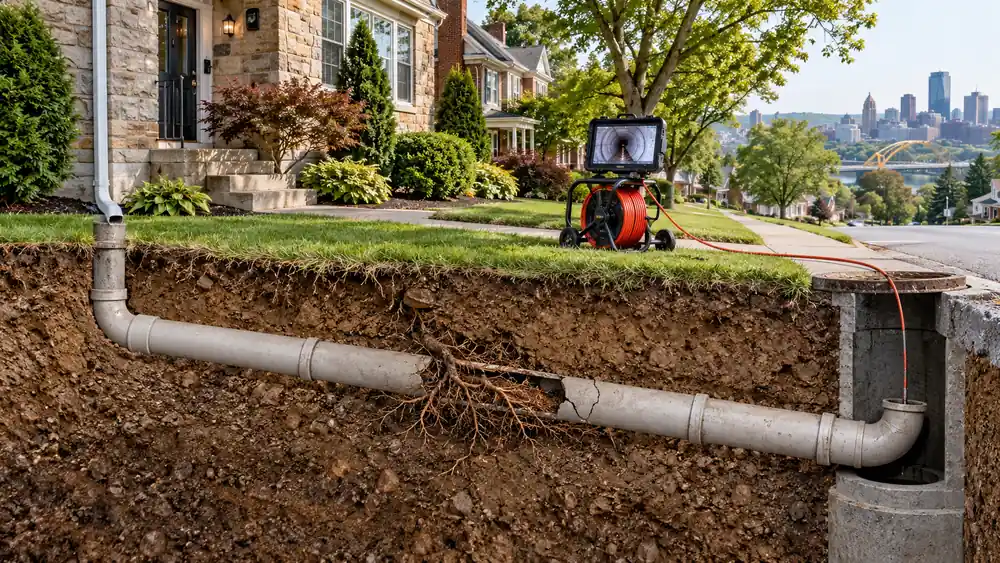
A sewer camera inspection, sometimes called a sewer scope or CCTV inspection, sends a camera through the lateral. It can reveal roots, broken sections, offsets, standing water, corrosion, collapse, poor joints, or other physical defects. It does not by itself prove whether roof or yard drainage is legally connected.
That is why a home can pass the dye process and still have a damaged lateral. It can also have a sound-looking lateral while failing dye compliance because a downspout or drain is connected to the wrong sewer. Before requesting bids, make sure the seller knows which problem exists.
City of Pittsburgh Dye-Test Rules
Every City of Pittsburgh property sale requires an Evidence of Compliance application. Pittsburgh Water reviews the application and decides whether the property is in a sanitary-sewer area that requires a physical dye test. A property in a combined-sewer area may not need the physical test, but the application is still required. The current application fee is $20.
If a dye test is required, a certified plumber or general contractor performs it and submits the results. Pittsburgh Water reviews those results before the owner takes corrective action. If an illegal stormwater connection is found, it must be corrected and a subsequent test submitted before the compliance certificate is issued. Sellers should not authorize corrective work from a failed dye result until Pittsburgh Water has reviewed the finding.
Surrounding Municipalities May Require CCTV
Do not apply City of Pittsburgh rules to every property with a Pittsburgh mailing address. Allegheny County contains many boroughs and townships with their own transfer requirements. Churchill, for example, requires its own private sanitary sewer CCTV lateral inspection as part of the home-sale process. Other municipalities may require dye testing, camera inspection, occupancy review, or a different combination.
Confirm the governing municipality before ordering an inspection. The wrong test can waste time and still leave the actual closing requirement unfinished.
What Happens If an Inspection Fails Before Closing?
Turn the failure into a documented problem. Ask for the written report, photographs, camera video, plumber notes, dye-test result, and the suspected defect location.
- Confirm whether the finding involves an illegal stormwater connection, a damaged private lateral, or both.
- Identify whether the issue is on the private lateral, public sewer main, or near the wye connection.
- Obtain an itemized quote from a qualified plumber or sewer contractor for the specific condition found.
- Notify the agent, buyer, and closing professional promptly if the issue affects the contract or scheduled closing.
- Ask whether the municipality requires a retest, inspection, permit, or written clearance before transfer.
- Check the purchase agreement and lender deadlines before agreeing to a repair credit, extension, or other settlement term.
For a City dye-test failure, wait for Pittsburgh Water’s review before deciding on corrective work. For a camera-discovered defect, compare the contractor’s recommendation with the buyer’s request, municipal requirements, and lender position. A camera image of tree roots may lead to cleaning or repair, while a collapse, offset, or broken line can require a larger project. Do not promise a repair method until the condition is understood.
Who Pays for Pittsburgh Sewer Lateral Repairs?
Pittsburgh Water states that the property owner is responsible for the entire sewer lateral from the building to the public sewer system, while Pittsburgh Water maintains the sewer main and a small portion at the connection known as the wye. That utility responsibility is separate from how buyer and seller divide transaction costs.
A purchase agreement can sometimes allocate repair costs through a seller repair, credit, price change, escrow arrangement, or another negotiated term when the municipality, lender, title provider, and contract allow it. However, a private agreement cannot simply waive a City corrective action that must be completed before Pittsburgh Water will issue Evidence of Compliance.
Outside the City, lateral ownership and transfer rules can differ. Before negotiating who pays, confirm who owns the affected section and what must be completed for closing.
Repair, Credit, or As-Is Sale: How Can a Seller Proceed?
Once the finding and municipal requirements are clear, sellers can compare several realistic paths. The best choice depends on repair cost, time, buyer financing, contract rights, and expected net proceeds.
| Option | Seller Advantage | Main Risk | Confirm First |
| Repair before transfer | Creates a clearer buyer file and can satisfy required corrective work | Cost, excavation, permits, retesting, and scheduling | Exact scope and municipal signoff |
| Negotiate credit or price | May avoid seller-managed construction | Buyer or lender may reject unresolved condition | Contract, lender, municipality, title provider |
| As-is or cash sale | May reduce lender-related repair pressure | Does not bypass mandatory compliance or title conditions | Buyer due diligence and written closing requirements |
If repairs are required by Pittsburgh Water before compliance can be issued, a credit alone does not substitute for the required correction. If the issue is a negotiable physical defect discovered by a buyer’s camera inspection, the parties may have more flexibility, but the signed contract controls available remedies.
If You Cannot Afford Repairs
Start with the numbers before assuming the transaction is impossible. Ask for two or three itemized bids and calculate expected seller proceeds after the mortgage, closing costs, credits, and sewer work. Then discuss whether contractor payment can be coordinated with closing proceeds, whether the purchase price or credit can be renegotiated, or whether an extension is realistic.
Do not confuse water-bill assistance with sewer-lateral replacement funding. If the repair exceeds the seller’s budget, have the closing professional and attorney review permitted transaction structures.
How Much Could Sewer Lateral Repairs Cost?
There is no reliable single Pittsburgh price for sewer-lateral repair or replacement. Cost depends on the length and depth of the damaged section, pipe material, excavation access, slope, street or sidewalk restoration, landscaping, trenchless feasibility, traffic control, permits, and whether the work reaches the public connection.
Ask two or three qualified local contractors for itemized proposals that identify the repair method, footage, excavation, pipe replacement, cleanouts, permits, inspection, backfill, concrete or asphalt restoration, landscaping, and follow-up testing. Compare what is included rather than choosing only the lowest headline number. A cheaper estimate can become more expensive if restoration, permits, or retesting are excluded.
How to Protect Your Pittsburgh Closing Date
Start the municipal process early. For City property, submit the Evidence of Compliance application before the final closing weeks. Pittsburgh Water currently charges a $20 processing fee and says it will respond to the initial application within 10 business days. If a dye test is required, the results are also reviewed within 10 business days after submission, but the total timeline becomes longer when testing, corrections, permits, contractor scheduling, or retesting are needed.
City code requires the Evidence of Compliance application at least 14 days before closing. Pittsburgh Water also asks sellers with a billing account in its service area to submit the final-bill request seven to ten working days before closing. Treat those periods as planning requirements and agency guidance, not guaranteed completion dates.
| Before Closing | Seller Action |
| Early in contract | Confirm the exact municipality and any dye, CCTV, occupancy, or lateral requirements. |
| At least 14 days before City closing | Submit the City Evidence of Compliance application. |
| If testing is required | Schedule the qualified contractor promptly and submit complete results. |
| If correction is required | Obtain permits and repairs, then complete any required retest or agency review. |
| 7-10 working days before closing | Submit the Pittsburgh Water final-bill request when applicable and confirm outstanding compliance items. |
Frequently Asked Questions
Can I sell my Pittsburgh house with a damaged sewer lateral without repairing it?
Possibly, if the defect is negotiable under the contract and the municipality, lender, title provider, and buyer allow the proposed closing structure. A damaged lateral does not cancel City dye-compliance requirements, and a required municipal correction cannot be ignored because the sale is as-is.
What should I do if my Pittsburgh house fails a dye test before closing?
Wait for Pittsburgh Water to review the submitted result and identify the corrective action. Then obtain the required permits and qualified contractor work, complete any required retest, and confirm the Evidence of Compliance certificate before relying on the original closing date.
Is a dye test the same as a sewer lateral camera inspection?
No. A dye test checks whether stormwater drainage is illegally connected to a sanitary sewer. A camera inspection evaluates the physical condition of the buried lateral. A property can pass one and still have a problem revealed by the other.
Who pays to replace a sewer lateral when selling a house in Pittsburgh?
The property owner is responsible to Pittsburgh Water for the private sewer lateral, but buyer and seller may negotiate transaction costs when the law, municipality, lender, and contract allow it. A private credit cannot replace a mandatory corrective action required for compliance.
Can I close while sewer repairs are pending in Pittsburgh?
Sometimes, but only if the actual municipality, agency, buyer, lender, title provider, and contract permit it. For City dye-compliance problems, do not assume pending work can roll past closing. Obtain written confirmation of the required clearance before promising the settlement date.
Conclusion: Identify the Sewer Problem Before You Choose the Closing Strategy
A Pittsburgh sewer issue is easier to manage when the seller first identifies exactly what failed. A City dye-test problem concerns stormwater compliance, while a camera inspection can reveal physical damage in the private lateral. Those findings create different repair, negotiation, and municipal requirements. Confirm the municipality, obtain written inspection evidence, understand which part of the system is affected, and gather realistic contractor bids before changing the contract. If City compliance is required, start the Evidence of Compliance process early and follow Pittsburgh Water’s review before corrective work. If the issue is a negotiable lateral defect, compare repair, credit, extension, and as-is options using the buyer’s financing and expected net proceeds. A clear diagnosis and written closing plan are the best protection against a sewer problem becoming a last-minute settlement delay.
Publication note: This article provides general educational information, not legal, plumbing, engineering, lending, or municipal advice. Sewer ownership, transfer requirements, inspection rules, repair approvals, and contract rights should be confirmed for the actual property and municipality.