
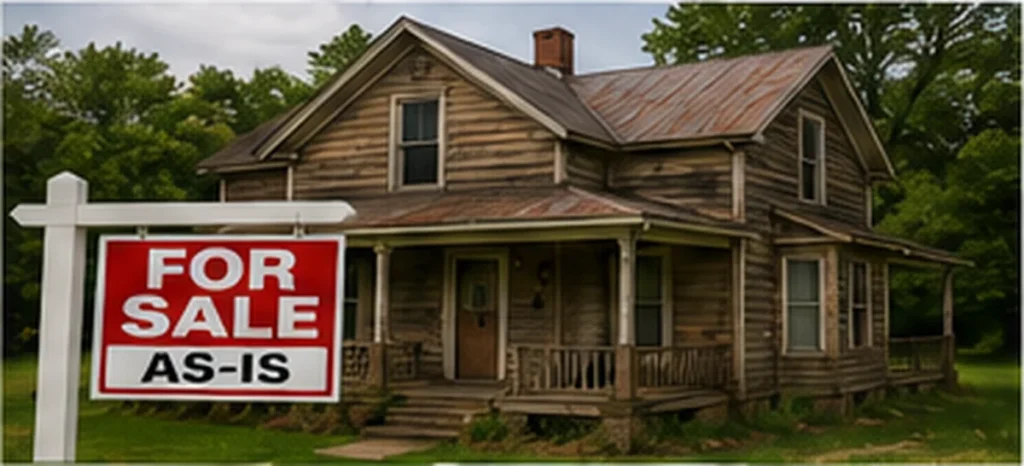
A house that needs major work can put a Tennessee homeowner in a difficult position. You can spend money on repairs, list the property in its current condition, or choose a direct sale and let the next owner handle the work. Selling a house as is in Tennessee can be practical when repairs are expensive or time is limited, but it is not automatically the best financial choice. Minor repairs may improve buyer confidence, while foundation movement, water damage, mold, old systems, or code problems can change who is willing to buy. The best decision comes from comparing repair cost, likely sale price, selling expenses, time, financing risk, and the amount you are likely to keep after closing.
What Does Selling a House As Is Mean in Tennessee?
An as is sale generally means the home is offered in its present condition and the seller does not plan to complete requested repairs before closing. It is a condition of the sale, not a promise that the buyer will never inspect the property or ask questions. The purchase contract still controls what each side can request, cancel, or negotiate.
For homeowners asking how to sell a house as is in Tennessee, it is important to separate repair responsibility from disclosure paperwork. A covered residential sale may still require a Tennessee property disclosure statement, or a residential property disclaimer when the buyer properly waives the disclosure, subject to statutory exceptions. The disclosure is not a warranty and it does not replace an inspection. An as is clause also does not make false statements or concealment acceptable.
Can a Buyer Still Inspect an As Is Home?
Yes. A seller does not have to order a prelisting inspection simply because the property is being sold, but a buyer may retain inspection rights under the contract. A buyer can also raise concerns or request repairs after an inspection. Whether the seller must agree depends on the signed agreement and the negotiation. In other words, can you sell a house as is without inspection? You may sell without ordering your own inspection, but that does not automatically remove a buyer’s inspection rights.
Which Repairs Are Worth Making Before You Sell?
The useful question is not whether every defect should be fixed. It is which repairs are likely to improve safety, function, buyer confidence, or the final net proceeds. Low cost items can make sense when they remove obvious objections. Examples include stopping an active leak, replacing a broken fixture, correcting a trip hazard, cleaning heavily soiled areas, clearing debris, or handling small maintenance items that are easy to complete.
When deciding what to fix before selling a house, start with issues that could create immediate concern during a showing or inspection. Then compare the cost with the likely benefit. Home repairs before selling should not become a full renovation by default. A large kitchen remodel, a highly personal upgrade, or a long cosmetic project can use cash and delay the sale without producing an equal increase in the amount you keep.
What May Not Be Worth Fixing?
Expensive cosmetic remodels are often poor candidates when the seller is already dealing with major structural or system problems. The same can be true for projects that take months, require several contractors, or expose the owner to change orders and hidden damage. When thinking about what not to fix when selling a house, compare the estimated price increase with repair cost, carrying costs, and the extra time before closing.
When Selling As Is May Make More Sense
Selling a house in bad condition may make more sense without repairs when the owner does not have the cash, time, or desire to manage a construction project. This often applies to inherited homes, urgent relocations, properties with years of deferred maintenance, rental properties with damage, or houses with several expensive systems reaching the end of their useful life.
A seller may also decide to sell house without repairs when carrying costs are becoming a problem. Mortgage payments, property taxes, insurance, utilities, lawn care, and security continue while work is underway. If the repair plan takes months, those costs can reduce the benefit of a higher future sale price. The right approach to a fixer upper depends on the numbers, not on a rule that repair or as is is always better.
Major Problems That Can Change Your Selling Options
Serious defects can reduce the number of buyers who are comfortable with the home, create insurance concerns, or make financing harder. That does not mean the property cannot be sold. It means the price, buyer type, inspection risk, and sale method may need to match the condition more closely.
Foundation Problems
Selling a house with foundation issues can be difficult when buyers see large cracks, uneven floors, water intrusion, or signs of movement. Before spending money on a major repair, consider getting a qualified evaluation or written estimate. Knowing the likely scope helps you compare a repair-first sale with an as is price instead of making a decision based on fear or guesswork.
Mold or Moisture Problems
Selling a house with mold or recurring moisture requires careful attention because buyers may worry about the cause as much as the visible growth. A leaking roof, plumbing issue, drainage problem, or wet crawl space can require professional evaluation. The seller should avoid guessing about the scope and should accurately handle any disclosure obligations that apply.
Code Violations or Unpermitted Work
Selling a house with code violations or unpermitted work can complicate a traditional transaction. Local rules, the type of violation, the buyer’s lender, insurance requirements, and the contract can all matter. Do not assume that every issue must be repaired before a sale, but do identify the problem early so buyers and closing professionals are not surprised late in the process.
How Much Do You Lose Selling a House As Is?
There is no reliable statewide percentage for how much do you lose selling a house as is. The difference depends on the home’s location, the severity of repairs, local demand, financing risk, and the type of buyer. A house needing a roof and cosmetic work is different from a property with foundation movement, fire damage, or major electrical problems.
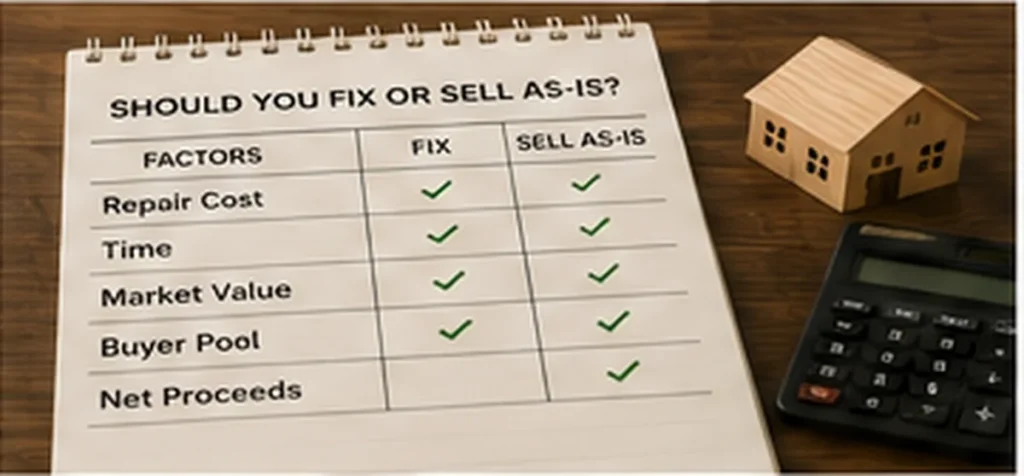
A better comparison is net proceeds. Estimate the likely repaired sale price, then subtract repair spending, selling expenses, buyer credits, and the carrying costs during the work. Compare that result with the likely net from an as is listing or direct offer. This approach makes the as is home sale pros and cons easier to judge because it focuses on the money left after the transaction instead of the highest advertised price.
Tennessee Disclosure Rules for an As Is Sale
Tennessee seller disclosure requirements do not disappear simply because the property is offered as is. For many covered residential transfers, the owner generally provides a Tennessee residential property condition disclosure or, when the buyer properly waives that disclosure, a residential property disclaimer. Exemptions can apply to certain transfers, so unusual situations should be checked before relying on a standard form.
The Tennessee property disclosure form is based on the seller’s knowledge and is not a warranty or a substitute for professional inspections. It should also be kept separate from the question of what repairs are required before selling a house. A seller may choose not to repair an item while still handling required disclosures truthfully. Current forms, contract terms, and transaction-specific duties should be reviewed with a Tennessee real estate professional or attorney when the situation is unclear.
Three Ways to Sell a Tennessee House That Needs Major Repairs
Make Repairs and List the Home
This route can fit when the repair budget is manageable, the seller has enough time, and the expected increase in net proceeds supports the work. It may also make sense when one or two repairs are blocking a broad group of financed buyers but can be completed reliably.
List the Property As Is on the Open Market
An open-market as is listing can preserve wider exposure while setting realistic expectations about condition. The home should be priced for the work it needs, and the seller should expect buyers to inspect and negotiate according to the contract. This route may attract investors, renovation buyers, and owner-occupants who are comfortable with repairs.
Sell the House As Is for Cash
A seller can also sell house as is for cash to a direct buyer. A true cash offer can reduce mortgage financing risk and may avoid a repair project, but the offer normally reflects the property’s current condition and the buyer’s costs and risk. Compare proof of funds, fees, closing conditions, contingencies, and the actual net amount rather than choosing the highest headline number.
How to Decide Whether to Fix It or Sell As Is
If you are asking whether to sell house as is or fix it up, use five questions. First, what will essential repairs realistically cost? Second, how much could those repairs increase the probable sale price? Third, how long will the work take and what will you spend while holding the property? Fourth, will the condition limit financing or the buyer pool? Fifth, is your priority the highest possible net amount, a faster sale, or less work?
Selling a house as is in Tennessee is most useful when the savings in time, repair risk, and carrying costs outweigh the extra price you might gain after renovation. Repairing can be stronger when the work is controlled, affordable, and likely to remove major buyer objections.
How to Sell a House in Bad Condition Without Overcomplicating It
- Identify the major condition problems you already know about.
- Get realistic repair estimates for the items that could change the selling strategy.
- Estimate the likely net proceeds from a repaired listing, an as is listing, and a direct cash offer.
- Prepare the correct Tennessee disclosure, disclaimer, or exemption paperwork for the transaction.
- Compare offers by net proceeds, contingencies, closing timeline, and certainty, not only the price.
This process keeps the decision practical. It also reduces the chance of spending money on work that does not improve the final result.
Frequently Asked Questions
Can you sell a house as is in Tennessee without making repairs?
Yes. A seller can offer a property in its current condition without agreeing to make repairs. The seller still needs to follow applicable disclosure, contract, lender, title, and local requirements.
Can you sell a house as is without an inspection?
A seller is not automatically required to order a prelisting inspection. A buyer may still have inspection rights under the purchase agreement, so the contract should be reviewed carefully.
What repairs are required before selling a house in Tennessee?
There is no universal repair list for every home sale. Local code issues, safety conditions, buyer financing, insurance, and contract terms can affect whether work is needed before a particular closing.
Can a buyer ask for repairs on an as is home?
Yes. A buyer can raise concerns or request a change. The seller’s obligation to agree depends on the contract and the negotiation.
Final Takeaway
The best path is the one that gives you a workable timeline, manageable risk, and the strongest realistic net proceeds. Before spending heavily on a damaged property, compare contractor estimates with the likely as is results. Selling a house as is in Tennessee can be the better option when major work adds more cost and uncertainty than value. If a sale is your goal, compare a repaired-listing estimate, an as is listing plan, and written offers before committing money to major repairs.