


Your Pittsburgh-area home is nearly ready for closing when the buyer’s agent asks for an occupancy permit. You search your paperwork and find nothing. Does that mean the sale must stop? Not necessarily. Occupancy rules depend on the municipality where the property actually sits. The City of Pittsburgh does not require a certificate of occupancy solely because a home is being sold, but it does require a separate Property Certification at sale closings. Nearby boroughs may require transfer applications, inspections, or occupancy paperwork. Understanding that difference early can prevent unnecessary repairs, missed deadlines, and confusion over whether the buyer can move in.
Is a Certificate of Occupancy Required for a Pittsburgh Home Sale?
No certificate of occupancy is required simply to buy or sell an existing property within Pittsburgh city limits. However, the City requires Property Certification when a property is sold or refinanced. That document informs the buyer or lender about important property records, including zoning and legal use. It is not interchangeable with an occupancy certificate.
A certificate of occupancy generally relates to an approved use of the property. A house may have an older occupancy record, while another long-established home may have no easily located digital certificate. Neither situation should be treated as automatic proof that the sale is prohibited. If a property was converted into apartments, used differently from its approved classification, or substantially altered, the legal-use question deserves closer review.
The key question is not simply, “Do I need an occupancy permit Pittsburgh sellers normally obtain?” It is, “What does my municipality require for this property and this transfer?” The answer determines which office to contact and what must reach the settlement company.
City of Pittsburgh vs. Surrounding Municipalities
An Allegheny County mailing address that says “Pittsburgh” does not establish that the property is inside city limits. Borough and township boundaries control local requirements. There is no single occupancy permit Allegheny County issues for every home sale.
For example, Pittsburgh city sellers obtain Property Certification. In Wilkinsburg, the borough lists a property-transfer or refinance application, a dye-test application, and either occupancy-related paperwork or a qualifying buyer acknowledgment, depending on how the property will be used at closing. Wilkinsburg says an occupancy permit is required when a buyer plans immediate occupancy, and it lists separate requirements for occupied rentals. Check the parcel’s municipality rather than applying either city’s process to the entire region.
Property Certification, Occupancy Certificates, and Zoning Records
Similar names cause expensive misunderstandings. Pittsburgh Property Certification, previously called a zoning certificate, is a closing-related report. According to the city, it addresses zoning classification and legality of use, historic designation, and recorded code violations or unsafe conditions. It also indicates whether an occupancy permit is on file. The owner or an authorized agent applies through OneStopPGH.
The city lists an application fee of $100 on its Property Certification page, last updated April 24, 2025. Confirm the current fee before submitting an application. The city explicitly says the Property Certification does not establish lawful occupancy or full compliance with building and zoning codes in place of a relevant occupancy certificate.
| Document | What it tells you | Why it matters |
| Pittsburgh Property Certification | Recorded zoning, legal-use and code information | Required for city sale/refinance closings |
| Certificate of occupancy | Approval for a particular building use or occupancy | Relevant when legal use must be verified |
| Municipal resale report | Results of an inspection under local transfer procedures | May identify repairs or a temporary certificate |
For a duplex, compare the number of units stated in the listing with municipal records before marketing the house as two legal apartments. A Property Certification that describes single-family use should prompt follow-up, not an assumption that a future buyer can continue a different arrangement. Sellers of inherited homes should take the same care when family members cannot find decades-old permits.
How to Check Occupancy Requirements Before Listing or Closing
A short review before listing is easier than resolving a document dispute days before settlement. Follow this order when arranging a property transfer inspection Pennsylvania municipalities may require:
- Confirm the exact municipality. Use the parcel location and municipal boundary information, not the mailing city alone.
- Contact the municipal building or code enforcement office. Ask whether a resale inspection, occupancy permit, transfer application, or certificate is required for the planned sale.
- Check existing occupancy records. For City of Pittsburgh properties, use the city’s Online Occupancy Search and request help from Permits, Licenses and Inspections (PLI) if an expected record cannot be found.
- Apply for the correct certification. Request Pittsburgh Property Certification through OneStopPGH if the property is inside city limits. In another municipality, ask which transfer documents apply.
- Ask about logistics in writing. Verify inspection appointments, fees, report expiration, reinspections, and whether the buyer may occupy the property immediately after closing.
Keep the recorded use, unit count, construction history, and any open enforcement notices together. An incomplete online search is only a starting point: missing digital information does not establish that a historic use was illegal. Likewise, a familiar property address does not confirm that all additions and converted spaces received required approvals.
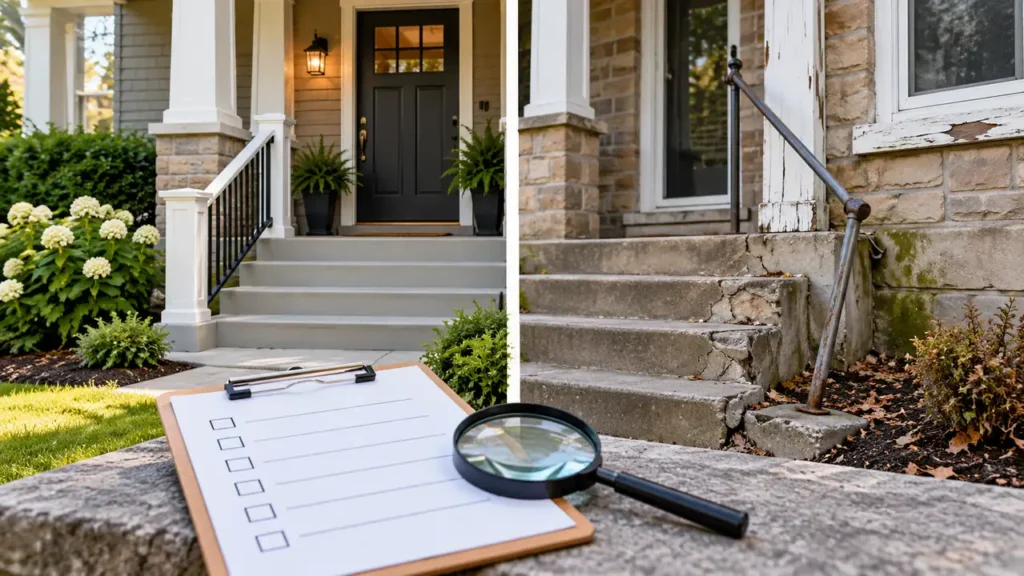
What Happens If a Municipal Occupancy Inspection Finds Violations?
A failed municipal occupancy inspection does not automatically cancel a Pennsylvania home sale. Under the Municipal Code and Ordinance Compliance Act, commonly called Act 99, a municipality that requires a resale use-and-occupancy certificate must distinguish ordinary violations from substantial violations. The law provides different certificate outcomes rather than treating every defect as a total bar to transfer.
| Inspection result | Certificate outcome | Buyer’s position |
| No violations | Use and occupancy certificate | Property may be used or occupied as approved |
| Violations but none substantial | Temporary use and occupancy certificate | Buyer may use or reside while correcting cited defects |
| At least one substantial violation | Temporary access certificate | Buyer can access for correction; new occupancy is restricted |
A substantial violation involves conditions that make a building, or part of it, unfit for human habitation under the statute. The inspection report and the municipality’s classification matter more than a casual description such as “minor issue” or “fixer-upper.” Pennsylvania’s 2024 amendment also affects the framework for purchaser compliance after acquisition.
Act 99 generally gives purchasers of property identified with violations or substantial violations 12 months from purchase to bring the property into compliance or lawfully demolish it. The municipality may negotiate a longer period at the owner’s request; particular enforcement, reinspection, and contractual obligations still require review. Do not treat this statutory framework as a promise that any lender must finance the transaction or any home is ready to occupy.
Temporary Use and Occupancy vs. Temporary Access
The distinction directly affects moving plans. A temporary use and occupancy certificate is the route for violations that do not rise to the level of substantial violations. It authorizes the purchaser to use or live in the property while arranging corrections under the statute.
A temporary access certificate is different: it allows access to address substantial violations, but it does not generally permit a new occupant to move in during its term. The statute provides a limited provision for existing tenants, subject to code enforcement’s habitability judgment. A buyer planning to sleep in the house on closing night should have the certificate type and occupancy conditions confirmed before moving trucks are booked.
Can a Sale Close Without Repairs or an Occupancy Permit?
Sometimes, yes. Whether a sale can close without completed repairs or a particular occupancy document depends on the municipality, the identified violations, the state-law certificate path, the purchase agreement, and the buyer’s financing. A municipal process that permits a temporary certificate does not require a lender or title company to ignore its own conditions.
Suppose a borough finds a repairable electrical issue that it classifies as a violation rather than a substantial violation. A temporary use and occupancy certificate may provide a lawful path for the buyer to complete the repair after transfer. If an inspection finds serious habitability problems, the buyer may receive only temporary access. Those two outcomes can lead to very different possession dates, insurance discussions, and loan decisions. These are illustrations, not predictions for a particular home.
Who pays for an occupancy inspection when selling a house? There is no reliable statewide answer that applies to every borough and every contract. Municipal fee schedules identify the application charges; the purchase agreement should identify who pays for inspection, correction, reinspection, and any negotiated credits. Confirm payment responsibility before the contingency or settlement deadline.
A seller considering selling a house without a certificate of occupancy should ask the municipality for a written explanation of what is required, then share it with the buyer, agent, lender, and closing professional. A promised repair credit does not by itself grant permission to occupy a property. Even a cash buyer needs an accurate understanding of the condition, certificate status, and outstanding obligations.
What Sellers Should Put in Writing Before Closing
Good documentation prevents the same issue from being argued twice. If repairs remain, identify each cited item, the responsible party, any agreed adjustment to the sale price, and the practical inspection schedule. Record whether the buyer will receive possession immediately or must wait for permission to occupy. If deadlines move, amend the contract rather than relying on verbal assurances.
Share the complete municipal report with the closing team, not just a summary of the items someone intends to repair. Ask the buyer’s lender whether the outstanding defects affect underwriting or appraisal conditions. The agent should coordinate contract language, while a Pennsylvania real estate attorney can address disputed obligations or unusual restrictions. None of these steps replaces an actual municipal certificate when the locality requires one.
A Pre-Closing Checklist for Pittsburgh-Area Sellers
Before choosing a settlement date, make sure the following items have clear answers:
- Verify the municipality, parcel address, current legal use, and number of dwelling units.
- Obtain Pittsburgh Property Certification or the appropriate borough or township transfer paperwork.
- Review all municipal inspection findings and ask which, if any, are substantial violations.
- Confirm who will complete repairs, pay fees, schedule reinspections, and hold copies of certificates.
- Make sure the buyer and lender understand any limits on move-in or access after closing.
- Deliver final reports, certifications, written agreements, and updated timelines to the settlement team.
Selling “as-is” can allocate repair costs between parties, but it does not erase municipal rules or occupancy restrictions. A clean transaction depends on matching the contract to the property’s actual legal status.
Frequently Asked Questions
Do I Need an Occupancy Certificate to Sell an Older Pittsburgh House?
Not simply because the house is old or being sold within City of Pittsburgh limits. Property Certification is still required for the sale closing. If no historic occupancy record appears online, ask PLI or the city’s zoning staff how to verify the approved use.
Can I Close on an Allegheny County Home If the Occupancy Inspection Fails?
Possibly. The specific municipality, inspection findings, certificate issued, lender, and contract control the next steps. Act 99 provides temporary use-and-occupancy and temporary access outcomes for different levels of violations, but neither guarantees every buyer can close or move in immediately.
Can Buyers Move In With a Temporary Use and Occupancy Certificate in Pennsylvania?
Generally, yes, when the municipality issues that certificate for non-substantial violations under Act 99. A temporary access certificate is different and does not authorize new occupancy during its term. Confirm the exact certificate and any local instructions before taking possession.
Who Usually Pays for the Occupancy Inspection When Selling a House?
The answer depends on municipal requirements and the purchase agreement. Before ordering an inspection, check the current local fee schedule and decide in writing who pays application charges, reinspection costs, and repairs. Do not assume the seller or buyer always pays.
How Can I Check Whether a Pittsburgh Property Has an Occupancy Certificate?
Start with the City of Pittsburgh’s Online Occupancy Search when the property is within city boundaries. Search the available address or permit information, then contact PLI about missing or unclear records. An absent online result is not a final determination of legal occupancy.
Does a Pittsburgh Property Certification Replace an Occupancy Permit?
No. Property Certification supplies zoning, legal-use, historic-designation, and code-record information for a city sale or refinance. The city states it does not substitute for a certificate establishing lawful occupancy or full code compliance. Ask which separate approval applies to the property’s use.
Conclusion: Verify the Right Document Before the Closing Date
The safest way to handle an occupancy permit question is to begin with the property’s municipality—not a generic countywide rule. City of Pittsburgh sellers should arrange Property Certification and investigate any discrepancy in legal use. Sellers in surrounding boroughs should confirm local transfer applications, inspections, and certificates before negotiating a closing date. If violations appear, identify whether the municipality permits use and occupancy or only temporary access, then agree in writing on repairs, costs, and possession. Taking these steps early gives both sides a clearer picture of what can happen at closing and whether the buyer can move in afterward.