

A Tennessee property owner can sell their own home without hiring a traditional listing agent. That gives the seller control over pricing, marketing, showings, negotiations, and communication with buyers. But how to sell a house without a realtor in Tennessee still involves contracts, state disclosures, title work, closing costs, federal requirements for some homes, and coordination with a closing professional. FSBO Tennessee sellers should treat the transaction as a sequence of deadlines and documents, not just a marketing project. The sections below cover the decision, pricing, MLS exposure, disclosures, purchase agreement, costs, and closing.
Can You Sell a House Without a Realtor in Tennessee?
Yes. Tennessee real estate licensing law provides an owner exemption for a person dealing with property they own or lease. That means an owner does not need a real estate license simply to sell their own property. Selling your own home is different from acting for someone else for compensation.
The owner still has to follow the disclosure, contract, title, tax, and closing rules that apply to the transaction. For sale by owner Tennessee is a legal selling route, but it transfers more responsibility to the homeowner.
Is FSBO the Right Choice for Your Sale?
FSBO can fit sellers who want direct control, have time to manage buyer questions and showings, and are comfortable comparing offers and tracking paperwork. It may also reduce or remove a traditional listing-side brokerage fee.
The tradeoff is workload and risk. Pricing, marketing, buyer screening, negotiation, disclosure timing, contract deadlines, and title coordination become the seller’s responsibility. A seller can still hire selected help, such as a photographer, appraiser, attorney, flat fee MLS broker, or closing company. FSBO vs realtor Tennessee is best compared by expected net proceeds, time, and support needs rather than assuming one route always saves more money.
Set the Price and Prepare the Home for Buyers
Use recent nearby closed sales with similar size, condition, age, and features. Active listings show competition, but they do not prove what buyers have paid. An appraisal can be useful when the home is unusual or the seller wants an independent value opinion.
Handle necessary maintenance, clean the property, prepare accurate photos, and write a factual listing description. Do not hide known material defects. Set a safe showing process, ask financed buyers for preapproval when appropriate, and keep basic records of inquiries and visits.
Decide How You Will Market the Property
A pure FSBO seller can use signs where allowed, social channels, FSBO sites, local promotion, and personal networks. A flat fee MLS Tennessee service uses a licensed broker to place the property in the applicable MLS for a stated fee while the owner still handles much of the sale.
Compare listing term, photo limits, changes, forms, showing tools, cancellation rules, and support. Broker compensation is negotiable. An MLS listing does not make buyer-broker compensation automatic, and offers of compensation are not displayed in NAR-affiliated MLSs under current policy.
Complete the Tennessee Disclosures Before You Accept a Contract
Tennessee residential disclosure rules apply to many covered one-to-four-unit residential transfers even when no licensed broker is involved. For covered transactions, the owner generally provides either the residential property disclosure statement or an agreed disclaimer allowed by Tennessee law. The timing matters: the disclosure or agreed disclaimer is generally delivered before acceptance of the purchase contract, meaning before full execution by all parties. This is one of the easiest FSBO timing mistakes to make because a seller may focus on negotiating price first and paperwork second. Treat disclosure delivery as a pre-contract step rather than a closing-day formality.
The statutory disclosure is not a warranty and does not replace a buyer’s inspection. Sellers should answer based on their actual knowledge rather than guessing. Exemptions exist, so unusual transfers should be checked before the seller assumes the standard form applies.
Tennessee Property Condition Disclosure
The Tennessee Residential Property Condition Disclosure addresses the property’s known condition and includes statutory items and acknowledgments. The form used does not have to be one particular branded document, but it needs to include the required content. Keep a signed copy with the transaction file.
Federal Lead Paint Disclosure for Older Homes
For most housing built before 1978, federal lead-based paint rules require known lead information and available records, the EPA pamphlet, required warning language, and the buyer’s inspection opportunity before the buyer becomes obligated under the contract, subject to applicable exceptions.
Put the Deal in a Clear Written Purchase Agreement
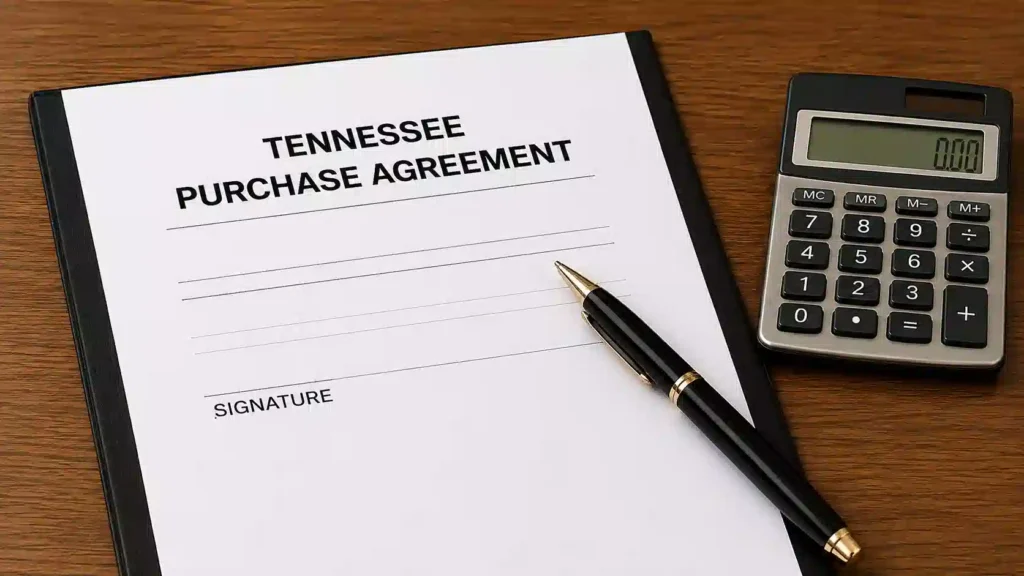
The purchase agreement controls the legal and financial terms after it is fully executed. A Tennessee FSBO contract should clearly address the legal names of the parties, property, price, earnest money, financing, inspection, appraisal when applicable, title, closing date, possession, included personal property, repairs or credits, contingencies, default, and signatures. The effective date matters because many rights and deadlines run from the signed contract. A seller should know exactly when earnest money is due, when inspection rights end, when financing notices are required, and what happens if a party misses a deadline.
Do not copy an unrelated internet contract and then add legal language you do not understand. Seller financing, leasebacks, probate, several owners, liens, boundary issues, or unusual contingencies are strong reasons to get Tennessee legal review.
What to Check Before Signing
Confirm the buyer’s financing or proof of funds. Check every deadline and contingency period. Identify the closing professional and title process early. Make sure concessions and any agreed buyer-broker compensation are written clearly. Keep signed copies of every amendment and disclosure.
Understand the Costs of Selling FSBO in Tennessee
Avoiding a full-service listing agent can reduce listing-side brokerage charges, but other expenses remain. Possible costs include a flat fee MLS service, photography, appraisal, repairs, attorney review, title or settlement charges assigned to the seller, lien or HOA payoff items, mortgage payoff, prorated charges, concessions, and moving costs.
Broker compensation is negotiable and not set by law. An FSBO seller may agree to buyer-broker compensation, but it is not automatic. Seller closing costs Tennessee transactions produce depend on the contract rather than one universal percentage. Tennessee’s realty transfer tax should also not automatically be listed as a seller charge: state guidance assigns responsibility to the grantee or transferee, with a current rate of $0.37 per $100 of purchase price.
How the Tennessee FSBO Closing Process Works
After contract acceptance, send the signed agreement and required information to the selected settlement or closing professional. Title work checks ownership, liens, mortgages, judgments, and other issues that may affect transfer. Order the mortgage payoff early and address title problems before the closing date. If the buyer is financing the purchase, lender conditions can continue changing until funding. Keep communication open with the closing professional and respond promptly when documents are requested.
Track the buyer’s financing, inspection, appraisal, repair negotiations, and contractual deadlines. Before closing, review the final settlement figures and expected proceeds. At closing, the required documents are signed, funds are handled through the settlement process, existing obligations are paid as required, and the deed is recorded.
Who Handles Closing on a FSBO in Tennessee?
A routine Tennessee closing may be coordinated through a title or settlement company. Tennessee law recognizes settlement agents in covered mortgage transactions. An attorney can provide legal advice and is especially useful for complex contracts, title disputes, unusual ownership, or other legal issues. Tennessee should not be described as requiring an attorney at every residential closing. Ask early who will prepare the deed, who will hold funds, and how final wire instructions will be verified. Those details are part of transaction coordination and should not be left until the day before signing.
Common FSBO Mistakes That Can Delay a Sale
Common problems include pricing from active listings instead of comparable closed sales, accepting a contract before completing required disclosure steps, using a vague purchase agreement, missing inspection or financing deadlines, waiting too long to order title and payoff information, and assuming every buyer has the same financing strength. Another mistake is treating broker compensation or closing costs as fixed when the contract and transaction determine the final allocation.
When Professional Help Is Worth the Cost
Limited professional help can be useful without turning the sale into a full-service listing. Consider an appraiser when pricing is uncertain, an attorney when contract or title questions are unusual, and a qualified closing or settlement professional early in the transaction. The goal is to get help where a mistake would cost more than the service.
Frequently Asked Questions
Is it legal to sell a house without a realtor in Tennessee?
Yes. An owner can generally sell property they own without a real estate license or listing agent. The seller still has to follow the laws and contract requirements that apply to the transaction.
What paperwork do I need for a Tennessee FSBO sale?
Common documents include the Tennessee property disclosure or permitted disclaimer when applicable, purchase agreement and amendments, federal lead documents for qualifying older homes, title and payoff information, and closing documents.
Who pays closing costs in a Tennessee FSBO sale?
The answer depends on the type of cost and the contract. Some charges are commonly assigned one way, but many items can be negotiated. Tennessee realty transfer tax is assigned by state guidance to the grantee or transferee.
Do I need a lawyer to sell a house by owner in Tennessee?
Tennessee does not require an attorney at every residential closing. Legal help is still useful when the contract, title, ownership, financing, or other terms are complicated.
Can I use a flat fee MLS and still sell FSBO?
Yes. A flat fee MLS listing can provide MLS exposure while the owner continues to handle much of the pricing, showings, buyer communication, negotiation, and paperwork.
Final Takeaway
A Tennessee FSBO sale can work when the seller is organized and understands what the listing agent would normally handle. Price from real comparable sales, complete required disclosures before contract acceptance, use a clear written agreement, identify the closing professional early, and compare offers by net proceeds and risk. If you are deciding how to sell a house without a realtor in Tennessee, first compare the expected savings with the time and responsibility you will take on, then get professional help for any contract or title issue you do not fully understand. This guide is general information and is not a substitute for legal advice about a specific contract or title issue.