

The sale price is not the amount a Tennessee seller keeps. The cost of selling a house in Tennessee can include negotiated broker compensation, seller-assigned closing charges, concessions, property-tax adjustments, optional preparation costs, and other transaction-specific items. The mortgage payoff can be the largest deduction from the check at closing, but it is repayment of existing debt rather than a selling fee. Taxes need to be separated carefully too: Tennessee’s recordation rules do not automatically place realty transfer tax on the seller, while federal capital-gains rules can still apply to a profitable home sale. The practical way to judge an offer is to estimate net proceeds with current written numbers instead of using one broad statewide percentage.
What Tennessee Home Sellers May Pay at a Glance
There is no single universal seller percentage. Commission agreements, concessions, preparation, closing charges, liens, and contract allocations vary from one property to another. The most useful budget separates true transaction costs from mortgage debt and optional spending.
| Cost category | Usually fixed or variable | Effect on seller net |
| Broker compensation | Negotiated | Reduces net if seller-paid |
| Seller closing charges | Property and contract specific | Reduces net |
| Seller concessions | Negotiated | Reduces net by agreed amount |
| Property prorations | Closing-date specific | Adjusts proceeds |
| Mortgage payoff | Loan specific | Reduces cash but is debt |
| Repairs and preparation | Seller choice/property condition | Reduces economic net |
| Federal tax, if any | Taxpayer specific | May affect after-sale result |
What Does a Seller Pay at Closing in Tennessee?
A Tennessee seller may see settlement or document charges assigned by the purchase agreement, lien-release costs, HOA amounts when applicable, prorated property items, and title-related charges the seller agreed to pay. Buyer loan charges are separate and should not be mixed into the seller’s estimate. Title insurance should not be treated as an automatic seller expense because payment depends on the contract and transaction.
Review the seller side of the settlement statement or Closing Disclosure before signing. Also distinguish fees from debt. A mortgage payoff, HELOC, judgment, or other valid lien can reduce the cash you receive, but those amounts are not the same as Tennessee real estate closing costs.
Who Pays Closing Costs in Tennessee?
Buyers and sellers each have their own transaction costs, and some items can be negotiated in the purchase agreement. A financed buyer usually has lender-specific expenses, while the seller pays the charges assigned to the seller by contract or law. The realty transfer tax follows a separate Tennessee rule discussed below.
Realtor Fees and Commission Agreements
Realtor fees for selling a house are negotiable. Tennessee does not impose a standard commission percentage that every seller must pay. The seller’s listing agreement should state the compensation structure, and any seller-approved payment or concession involving a buyer’s broker should be evaluated separately.
When estimating net proceeds, use the actual written agreement rather than a generic national average. Compare the fee with the services included, such as pricing, marketing, photography, showings, negotiation, and closing coordination. A lower fee is only one part of the result if the sale price, concessions, timeline, or closing risk changes.
Taxes That Can Affect a Tennessee Home Sale
Tennessee recordation tax includes different taxes tied to recorded instruments. Under current Department of Revenue guidance reviewed in 2026, the realty transfer tax is calculated at $0.37 per $100 of value or consideration as defined by the rule, and the grantee or transferee is responsible for that realty transfer tax. It should not be listed automatically as a standard seller cost. A separate indebtedness tax can apply to certain recorded debt instruments and should not be confused with the transfer tax.
Tennessee’s former Hall income tax was fully repealed beginning January 1, 2021. That does not mean every profitable home sale is free of tax. Federal capital-gains rules still apply. A qualifying main-home seller may be able to exclude up to $250,000 of gain, or up to $500,000 for many married couples filing jointly, when the federal ownership, use, and other requirements are met. Property-tax prorations can also appear on the closing statement. Tax treatment for rentals, business use, depreciation, inheritance, divorce, or large gains should be reviewed with a qualified tax professional.
Seller Concessions and Negotiated Buyer Costs
A seller concession is a negotiated seller payment or credit toward eligible buyer costs or another agreed item. It can be offered in the listing strategy or negotiated after an offer is submitted, subject to the financing and transaction rules. A concession is not an automatic Tennessee fee.
If a seller gives a $5,000 closing-cost credit, include the full $5,000 as a reduction in the seller net estimate. Keep general concessions separate from any broker-compensation arrangement so you can see exactly which term is changing the proceeds.
Mortgage Payoff and Costs Sellers Often Overlook
The mortgage payoff when selling a house can include remaining principal, interest through the payoff date, and other lender-specified payoff amounts. Request a current payoff statement rather than estimating from the monthly mortgage balance. A payoff can change as the closing date changes.
Other overlooked expenses can include repairs, cleaning, optional staging, moving, utilities while listed, HOA balances, judgments, tax liens, and property-specific title issues. Keep optional preparation costs separate from formal closing costs. That makes it easier to understand which expenses are necessary to transfer the property and which are choices made to improve marketability.
How Much Will I Make Selling My House?
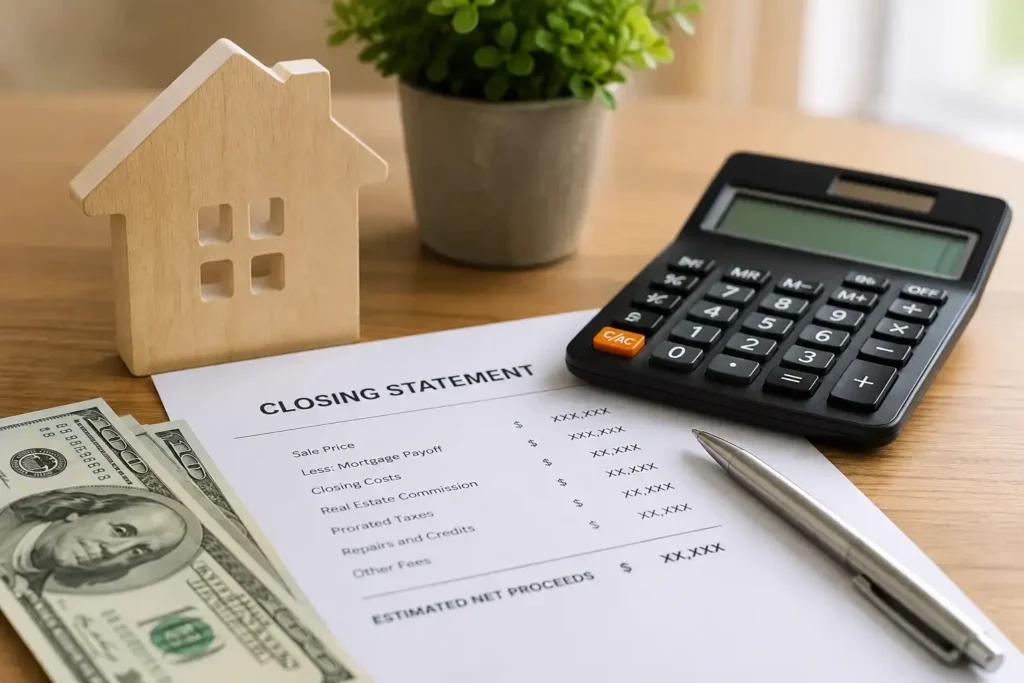
Use a net sheet formula: sale price minus mortgage payoff, seller-paid broker compensation, seller closing charges, concessions, prorations, liens, and other seller obligations equals estimated net proceeds. Then subtract any preparation and moving costs paid outside closing if you want the full economic result.
| Hypothetical seller net sheet | Example amount |
| Gross sale price | $400,000 |
| Mortgage payoff | -$220,000 |
| Negotiated broker compensation | -$16,000 |
| Seller closing charges | -$3,500 |
| Seller concession | -$5,000 |
| Prorations or liens | -$2,500 |
| Estimated net proceeds | $153,000 |
This example is a calculation format, not a Tennessee average. The actual figures should come from the loan payoff, written compensation agreement, title or settlement estimate, tax status, and accepted contract. Compare serious offers by net, especially when a higher price comes with larger concessions or repair demands.
A seller net sheet is most useful when it separates three groups: transaction costs, debt payoff, and optional preparation. That structure prevents a large mortgage balance from making the sale look unusually expensive and helps you see which charges can actually be negotiated. It also makes competing offers easier to compare because concessions and repair requests can be added without changing the rest of the calculation.
Closing timing can affect the result too. A later closing may add mortgage interest, utilities, insurance, HOA dues, maintenance, or moving overlap. A faster closing can reduce those holding costs, but it should still be weighed against price, financing certainty, inspection terms, and other conditions rather than treated as automatically better.
Ways to Keep More of Your Sale Proceeds
- Compare written service and compensation terms before signing.
- Ask for an estimated seller net sheet before accepting an offer.
- Resolve liens, HOA balances, and payoff questions early.
- Choose repairs based on likely return rather than renovating automatically.
- Evaluate concessions together with offer price and closing certainty.
Frequently Asked Questions
How Much Are Closing Costs in Tennessee for a Seller?
There is no single statewide percentage. The seller’s actual amount depends on the contract, broker compensation, settlement and title allocations, concessions, prorations, liens, HOA items, and other property-specific charges.
Who Pays the Realty Transfer Tax in Tennessee?
Under current Tennessee Department of Revenue guidance reviewed in August 2026, the grantee or transferee is responsible for the realty transfer tax. Recheck the rule before publication because tax guidance can change.
Does Tennessee Charge Capital Gains Tax When You Sell a Home?
Tennessee’s Hall income tax was repealed beginning in 2021. Federal capital-gains rules can still apply, including the main-home exclusion when the IRS ownership, use, and other requirements are met.
How Is a Mortgage Payoff Handled When Selling a House?
The closing professional typically uses a current lender payoff statement to satisfy the loan from sale proceeds. The payoff reduces the seller’s cash received, but it is repayment of debt rather than a selling fee.
What Are Seller Concessions and How Do They Affect Net Proceeds?
Seller concessions are negotiated payments or credits toward eligible buyer costs or agreed items. Any concession actually paid by the seller should be subtracted when comparing the estimated net proceeds from competing offers.
Final Takeaway
The cost of selling a house in Tennessee is a mix of negotiated fees, contract allocations, property-specific charges, mortgage debt, and taxes that may or may not apply to the seller. Get a current payoff and written closing estimate before judging an offer, then update the seller net sheet when concessions or other terms change. If you are comparing selling methods, compare the expected net proceeds and workload side by side rather than relying on the highest headline price.
General information only. Tax and closing treatment can vary by transaction and taxpayer. Verify current Tennessee tax guidance and obtain qualified tax advice for property-specific capital-gains questions.