
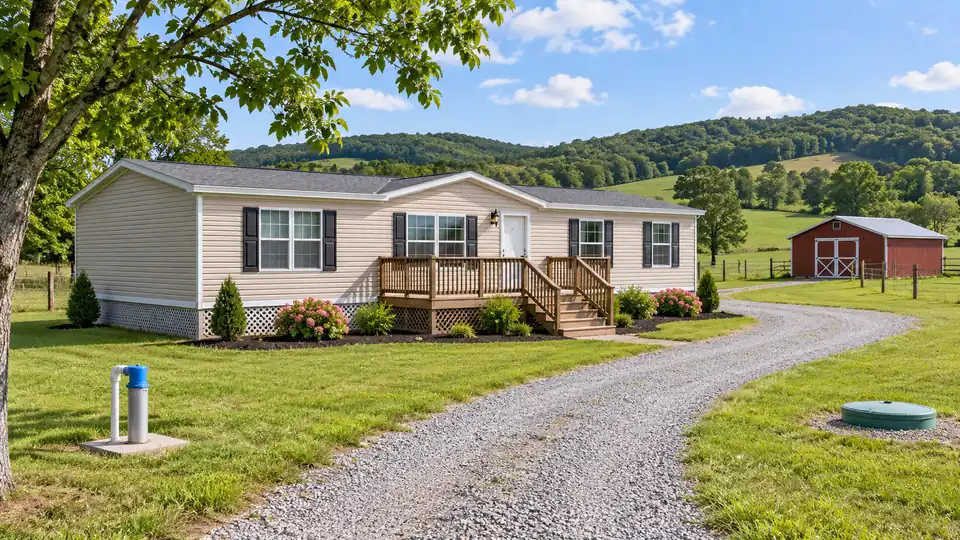
A buyer likes your Tennessee property, but the closing agent asks a question you cannot immediately answer: is the manufactured home included in the land deed, or does it have a separate title? The septic permit is missing, too. Selling a manufactured home in Tennessee can be straightforward once those records are understood, but an attractive offer alone will not fix ownership or utility questions. Begin by confirming how the home and land are legally held, gather the rural-property documents, and compare sale methods using what you will actually receive at closing.
First, Check Whether the Home and Land Can Be Sold Together
An older single-wide or double-wide may sit on owned acreage without being legally treated the same way as the land. Some manufactured homes retain a certificate of title, much like other titled personal property. Others have been permanently affixed and completed Tennessee’s de-titling process, supported by a recorded Affidavit of Affixation and other documentation. The correct transfer procedure depends on the actual records, not on how long the home has occupied the site.
Start with two searches. Ask the county Register of Deeds for the current land deed and any recorded affixation instrument. Then check the manufactured-home title status through the county clerk or Tennessee Department of Revenue. Compare the legal owners, address, liens and serial numbers. If ownership differs, determine who can lawfully convey each interest before accepting a purchase contract.
A practical rule is to examine the deed together with evidence of proper affixation and cancellation when the home is being sold as part of the real estate. If a separate active title remains, the closing team should plan for the additional transfer document. A deed transferring the acreage alone does not necessarily transfer separately titled personal property.
What if the manufactured-home title is missing?
Do not assume missing paperwork means the title was never issued. An active title that has been lost may qualify for a duplicate-title procedure. A legally canceled title is different: requesting a duplicate is not automatically the right response. Ask the county clerk or Department of Revenue to establish which record exists. The state has separate procedures for de-titling and, where applicable, reinstating a canceled title. For a double-wide, check identifiers for every section; an incomplete serial-number record can stop an otherwise ready transaction.
Collect the Records a Rural Buyer and Closing Agent Will Need
When selling rural property, the buyer is purchasing more than the living space. The acreage, access, outbuildings, utilities and recorded rights may be as important as the home’s interior. A little preparation before listing can keep a late title search or lender request from disrupting negotiations.
Gather the current land deed and legal description, recent property-tax statement, mortgage or lien balances, any survey, manufactured-home certificate of title or recorded affixation documents, and the home’s make, year, model and serial numbers. Add permits, major repair records, insurance details, and information about water, electric and other utility service. Keep copies rather than giving away original ownership documents during a showing.
Next, look beyond the house. Does the driveway cross someone else’s parcel? Is there a recorded easement? Do fences match the known boundary, or is the acreage figure only from an old advertisement? Are barns, sheds, decks and additions included in the sale? Ask the local planning office about zoning, known permits, floodplain questions and any proposed use you want to advertise.
If a record is unavailable, say so. Your listing can accurately describe the property without promising unverified acreage uses or utility capacity.
Address Wells, Septic Systems, and Property Condition
A rural home may rely on a private well and an individual wastewater system instead of municipal services. Buyers will want to know the water source, whether the septic system is functioning, and what records support those statements. Get ahead of the questions rather than relying on a verbal assurance from a previous owner.
For septic information, request the permit and system records from Tennessee’s Department of Environment and Conservation (TDEC) or the appropriate local office. TDEC offers services relating to existing septic systems, including inspection letters that document system status. Construction, alteration and repair can require permits.
Tennessee does not have a general statewide rule requiring every private well to be tested simply because the property is being sold. Nevertheless, a buyer, lender or purchase contract may request water-quality testing. If you know of a problem, provide accurate information rather than claiming that the absence of a statewide sale test means water quality is irrelevant.
Check the home itself for roof leaks, moisture, flooring damage, heating and cooling performance, foundation support, underpinning and safe access.
What does “as-is” really change?
An as-is offer usually means the buyer accepts the agreed condition and the seller does not undertake specified repairs. It does not automatically erase title requirements, permit obligations or laws against misrepresentation. For covered Tennessee residential real-estate transfers, Tennessee Code §66-5-202 provides for a disclosure statement or, where the purchaser waives the required disclosure, a residential property disclaimer statement. Exemptions and the transaction’s classification matter. Have a Tennessee closing professional determine which form applies rather than assuming that writing “as-is” in the contract settles disclosure questions.
Choose Between Listing, FSBO, and a Cash Sale
There is no single best route for every manufactured home on rural land. The choice depends on the ownership records, condition, and sale costs. Compare three approaches before assuming that the first buyer offering convenience is your best option.
Listing with an agent. An agent experienced with rural and manufactured-home transactions may provide market exposure, comparable-sales analysis and help with buyer screening. You may need to make the property accessible for showings, coordinate inspections and negotiate repair or financing conditions.
For sale by owner (FSBO). You control marketing and negotiations, but you also arrange photos, disclosures, screening, contract review, deadlines and the closing team. Avoid relying on informal agreements when the home and land may require different transfer documents.
Direct cash offer. Cash buyers for mobile homes may consider properties with major repairs or unusual financing challenges. That can reduce dependence on buyer mortgage approval, though the purchase price may reflect repair costs, resale risk and the investor’s expenses. A cash buyer cannot make an unresolved title, legal-access problem or recorded lien disappear by promising a quick closing.
Use a written comparison, not a headline offer. Calculate expected net proceeds as the agreed price minus loan or lien payoffs, property taxes, negotiated closing expenses, broker compensation where applicable and any concessions. Confirm what property each offer includes. Verify proof of funds and review assignment rights and contingencies.
If the home is market-ready with clear ownership records, a listing may deserve serious consideration. If it needs expensive work or the seller cannot manage showings, request one or more written as-is offers for comparison. If the title is unclear, work on that issue first; changing buyer type will not resolve it.
Does a double-wide sell differently?
A double-wide can involve more than one manufacturer’s serial or VIN record because it was built in sections. Match each identifier to available title or affixation papers. Lenders may also review foundation and installation details. Do not assume every double-wide is eligible—or ineligible—for the same mortgage. Ask the proposed lender and title team to check the actual unit.
Move From Offer to Closing Without Last-Minute Surprises
Once you receive an offer, keep the closing process organized around five decisions. First, obtain the entire written proposal, including deposit, included property, contingencies, inspections and proposed possession date. A verbal cash offer gives too little information to compare with a listed sale.
Second, deliver both sets of ownership information to the closing professional: the land deed and the manufactured-home title or affixation history. Ask specifically whether the transaction needs a deed, a separate title transfer, lien releases or another corrective document. If the home was de-titled but is now proposed for sale separately from the land, the title team should examine whether lawful reinstatement is necessary and available.
Third, resolve remaining property questions. Confirm recorded access, outstanding tax and loan balances, the condition of agreed utilities, any requested septic or well evaluation, and required disclosures. Put repair credits, excluded structures and personal-property terms into the contract rather than leaving them to closing-day conversation.
Fourth, review the settlement statement. Check the agreed purchase price, prorated taxes, payoff amounts, fees and any concessions against the signed contract. Make sure each seller is signing in the correct legal capacity.
Fifth, complete the required transfers and retain copies of signed documents, recording confirmations and final payment records. A successful closing requires the buyer to receive the ownership interests actually promised, not merely the keys to the home.
When Is an As-Is Sale Worth Considering?
An as-is transaction can be reasonable when a manufactured home has substantial deferred maintenance, an aging roof, difficult access, costly systems or an owner who cannot manage renovations. It may also suit a remote rural parcel that needs a buyer comfortable with specialized diligence. But a simpler transaction should still be compared on net proceeds and actual contract obligations.
Request a basic estimate for the most important repair or title issue before deciding how much of a discount to accept. Compare at least one other informed offer when practical. If a buyer proposes to take care of paperwork, identify exactly who pays for legal corrections, what happens if they cannot be completed and whether the closing date depends on them.
Frequently Asked Questions
Can I sell a manufactured home with land in Tennessee if its title is missing?
Possibly. First determine whether an active certificate was lost or the home was legally de-titled and affixed to the land. A duplicate title is not automatically appropriate for a canceled title. Ask the county clerk and closing professional what record and transfer documents the buyer needs.
What paperwork is needed to sell an older double-wide and rural acreage?
Start with the land deed, legal description, home title or affixation documents, all section serial numbers, loan and lien releases, and owner identification. Buyers may also request surveys, access easements, septic permits, well information, repair records and appropriate disclosure documents. The exact set depends on the property and financing.
Can I sell my Tennessee rural home as-is with an old septic system or well?
Often, yes, but a sale depends on an acceptable contract, accurate disclosures and any applicable permits or corrective work. A lender may request inspection or water testing even without a universal statewide sale-test mandate. Check TDEC records and describe known conditions without promising that an old system will pass every buyer review.
Is it better to sell a manufactured home with its land or separately?
It depends on how ownership is documented, whether the home was permanently affixed, and what buyers will pay. Separating a formerly de-titled home may require a lawful title procedure and other work. Compare written offers, removal costs, financing conditions and the ownership paperwork before deciding.
How hard is it to sell a manufactured home quickly in Tennessee?
The strongest factors are clear title, land ownership, access, physical condition, realistic pricing and a buyer who can meet the contract terms. Start the title and records review early and avoid promising an unverified completion date.
Conclusion: Confirm the Records, Then Compare Your Options
Selling a manufactured home in Tennessee starts with a practical distinction: determine whether the home and acreage transfer together as real estate or require separate ownership paperwork. Then gather the deed, title and affixation records, check access and private utilities, and disclose known issues appropriately. Compare a traditional listing, FSBO and written as-is offers using net proceeds and actual closing obligations. If the records are unclear, ask a Tennessee title professional or real-estate attorney to identify the required correction before committing to a buyer. That work can protect the sale regardless of the method you choose.